Prosthodontic Treatments
Dental Crowns and Bridges in Lucknow
Protect a weakened tooth, or close the gap left by a missing one.
A crown covers and strengthens a damaged tooth. A bridge fills a gap using the teeth beside it. At Roots & Pulp in Aliganj, Dr. Shubham Tripathi will examine your teeth first, explain what he finds and talk through the options before anything is done.
At a glance
- A crown
- A cap that covers a tooth to protect and strengthen it.
- A bridge
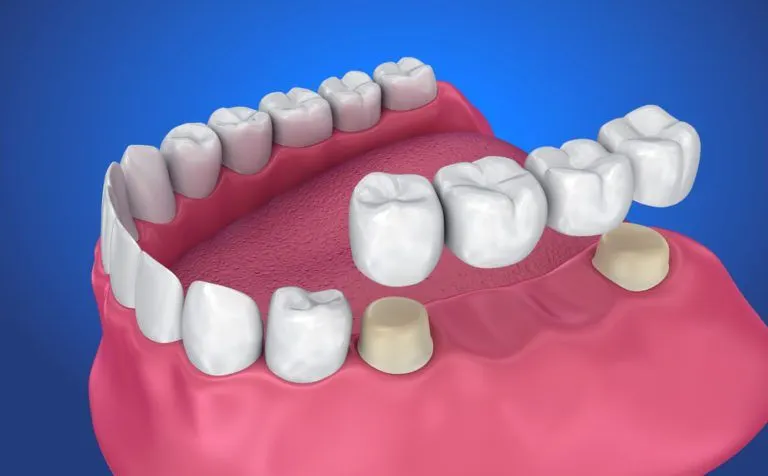
- A replacement tooth held in place by crowns on the teeth either side of a gap.
- Inlays and onlays
- Partial coverings for a tooth that needs more than a filling but less than a full crown.
- Planning
- Starts with an examination and usually an X-ray, so your dentist can explain what suits your tooth.
- Visits
- Often more than one visit, because the restoration is made to fit your tooth. Your dentist will explain what to expect.
Could crowns or bridges be relevant to you?
These are common reasons people ask a dentist about a crown or a bridge.
To protect a tooth
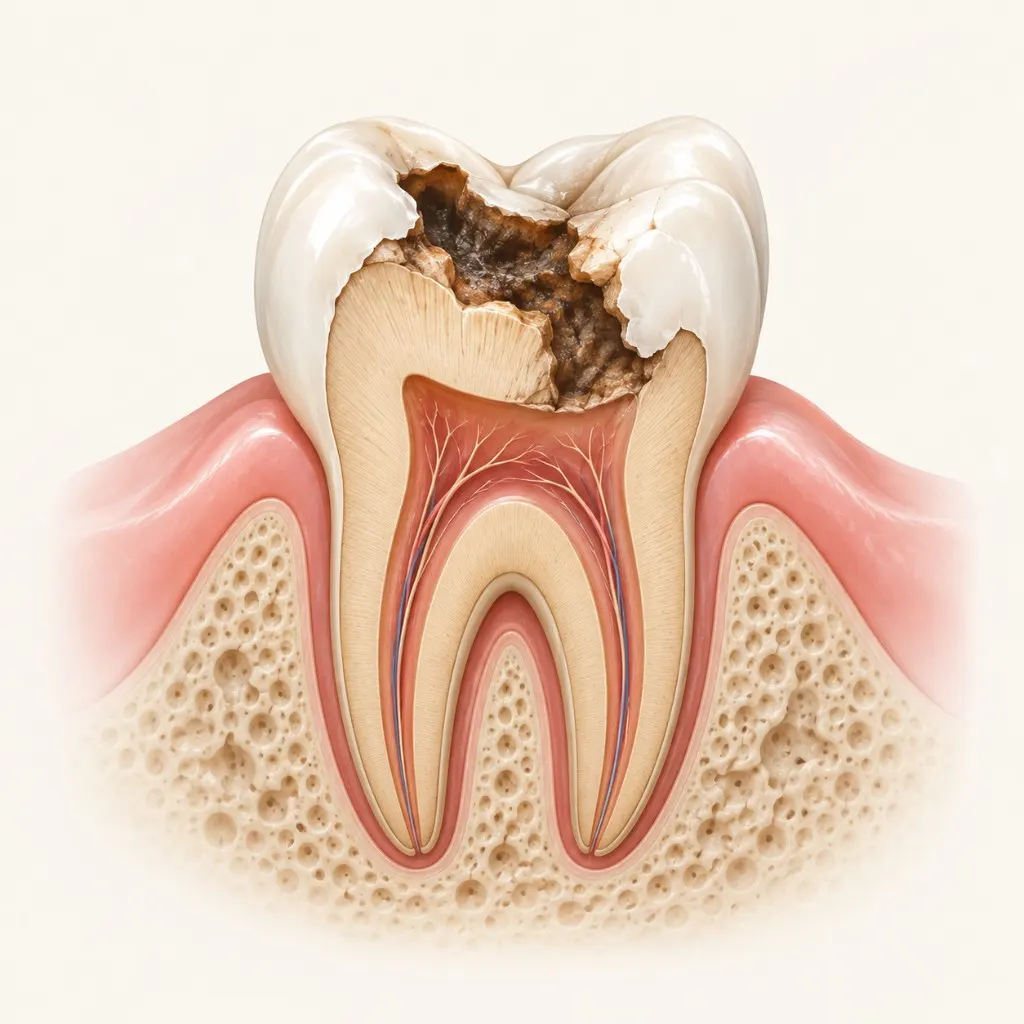
A large filling or heavy decay
Not much natural tooth is left to hold a filling.
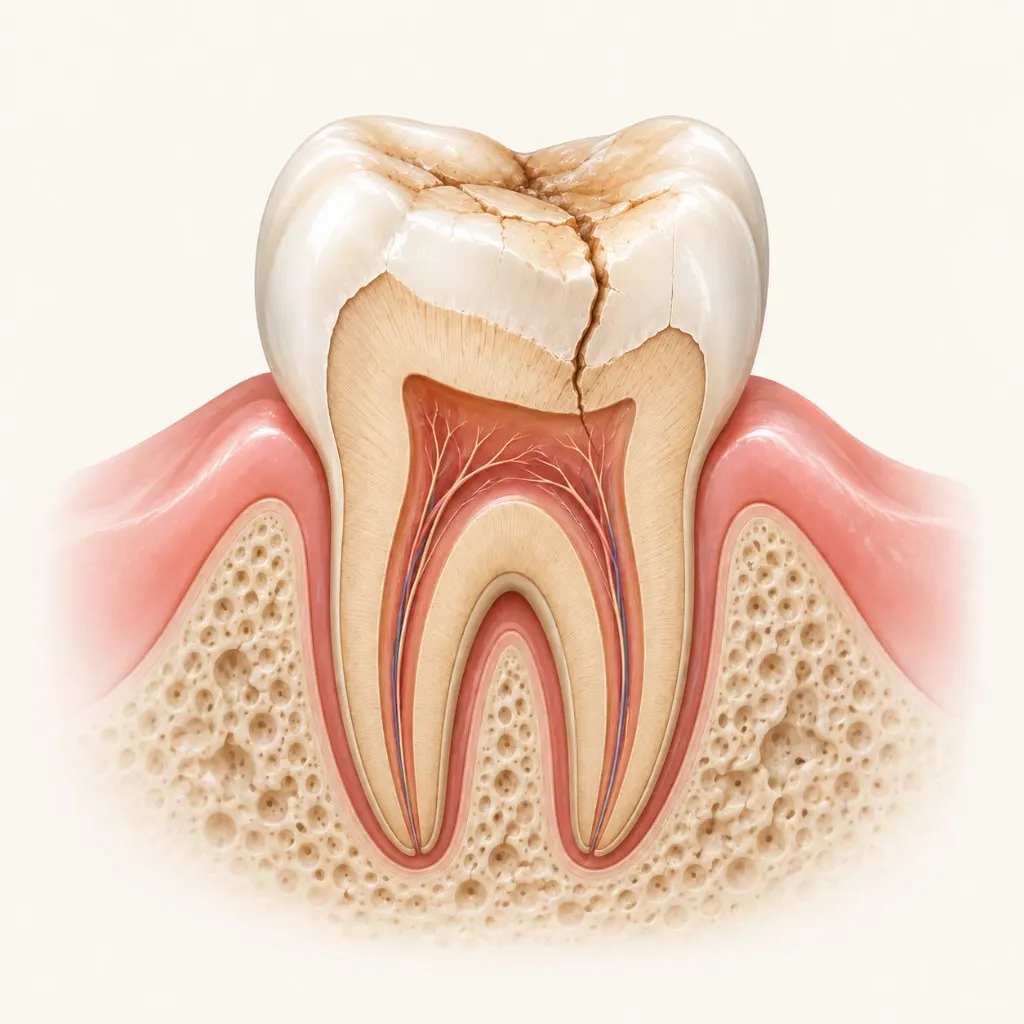
A cracked or worn tooth
A crown can help hold it together, depending on the crack.
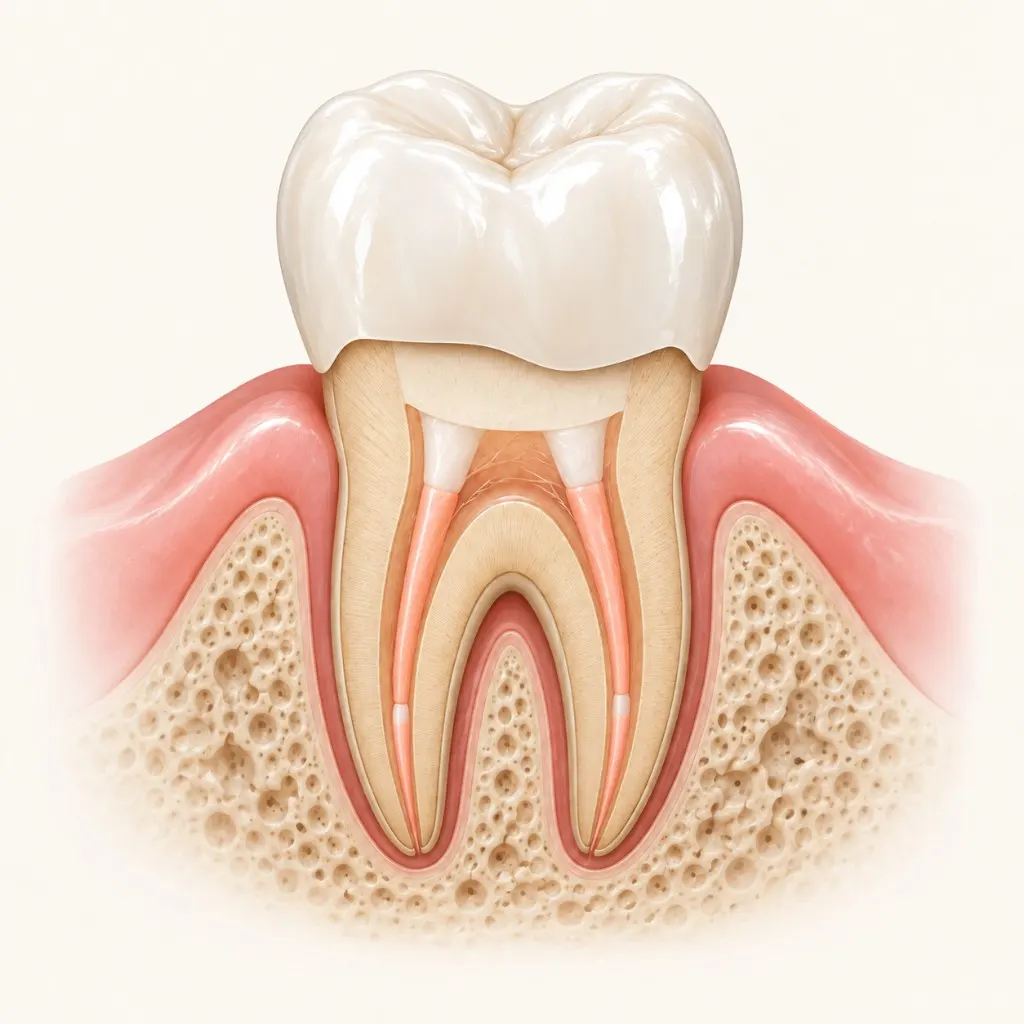
After a root canal
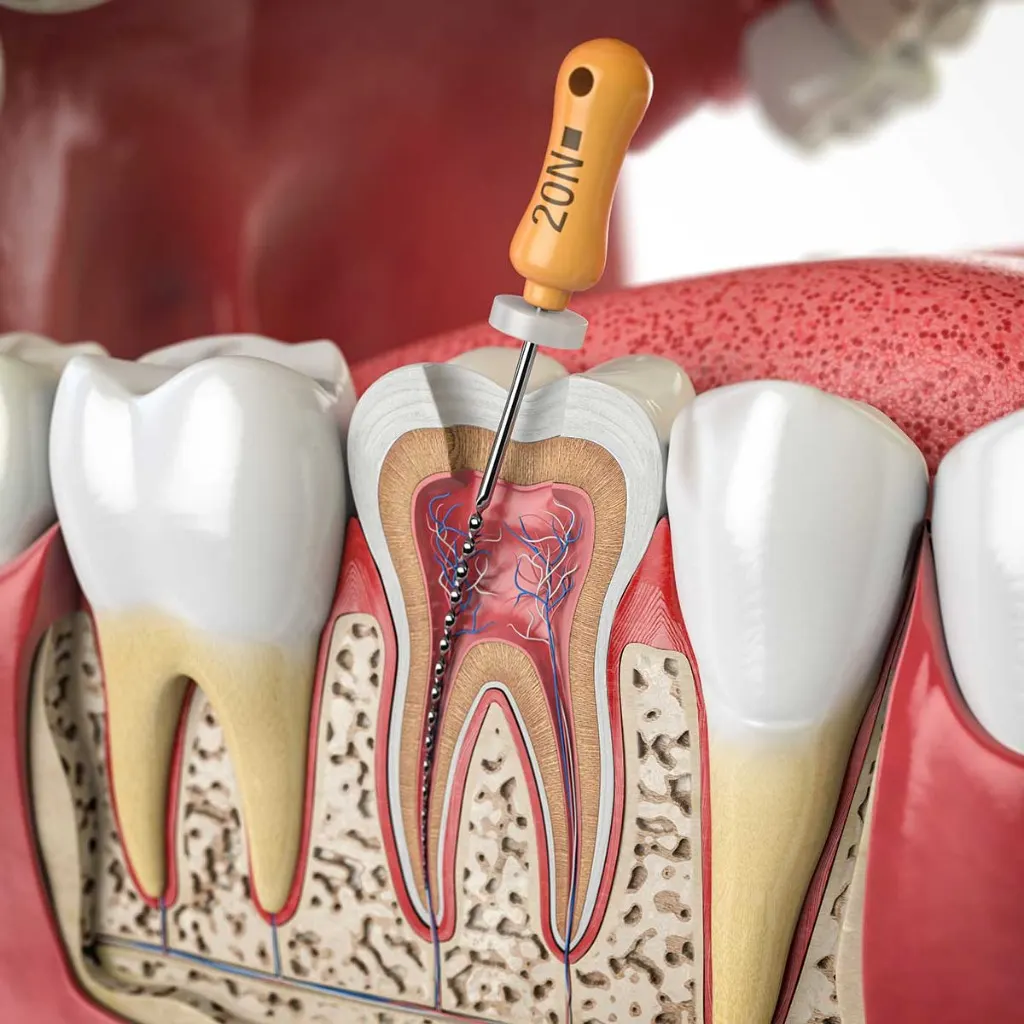
Many treated teeth are protected with a crown.
To fill a gap
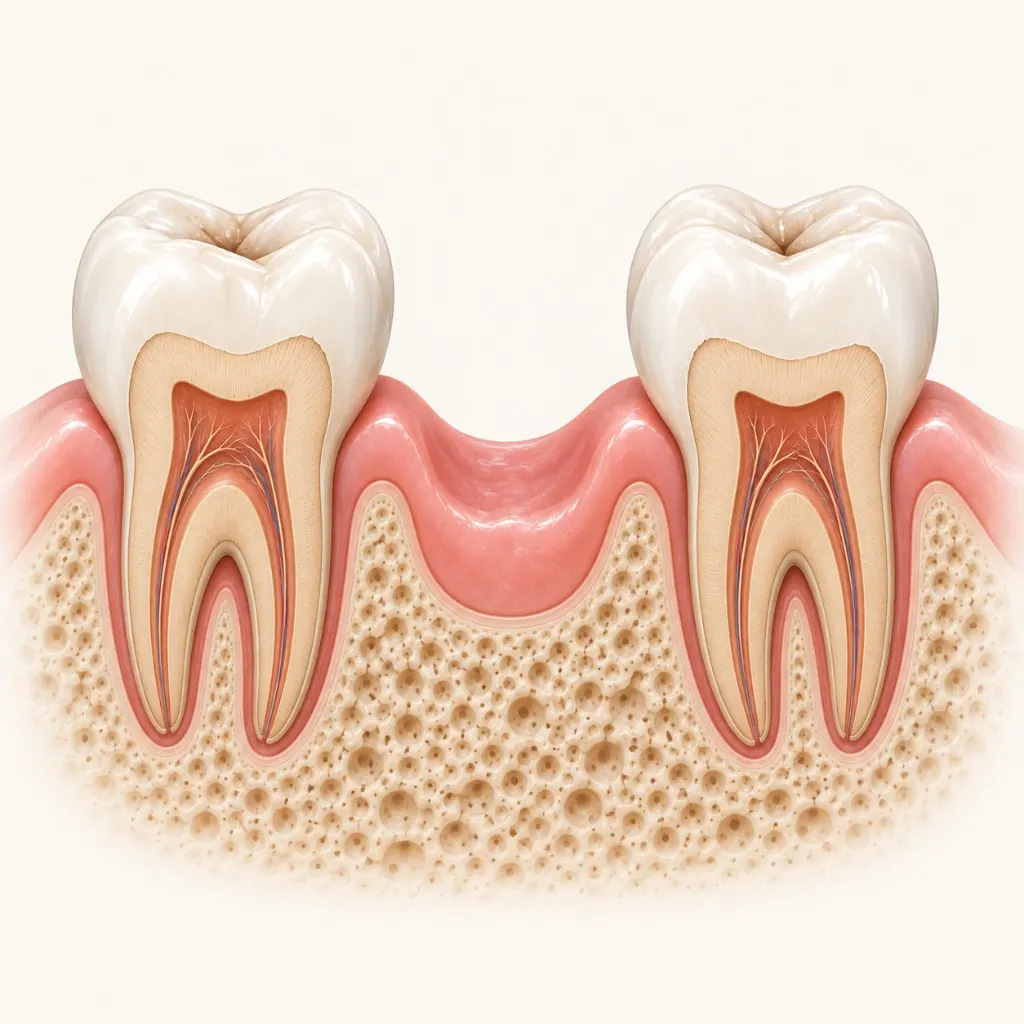
A missing tooth
A bridge is one way to replace it.
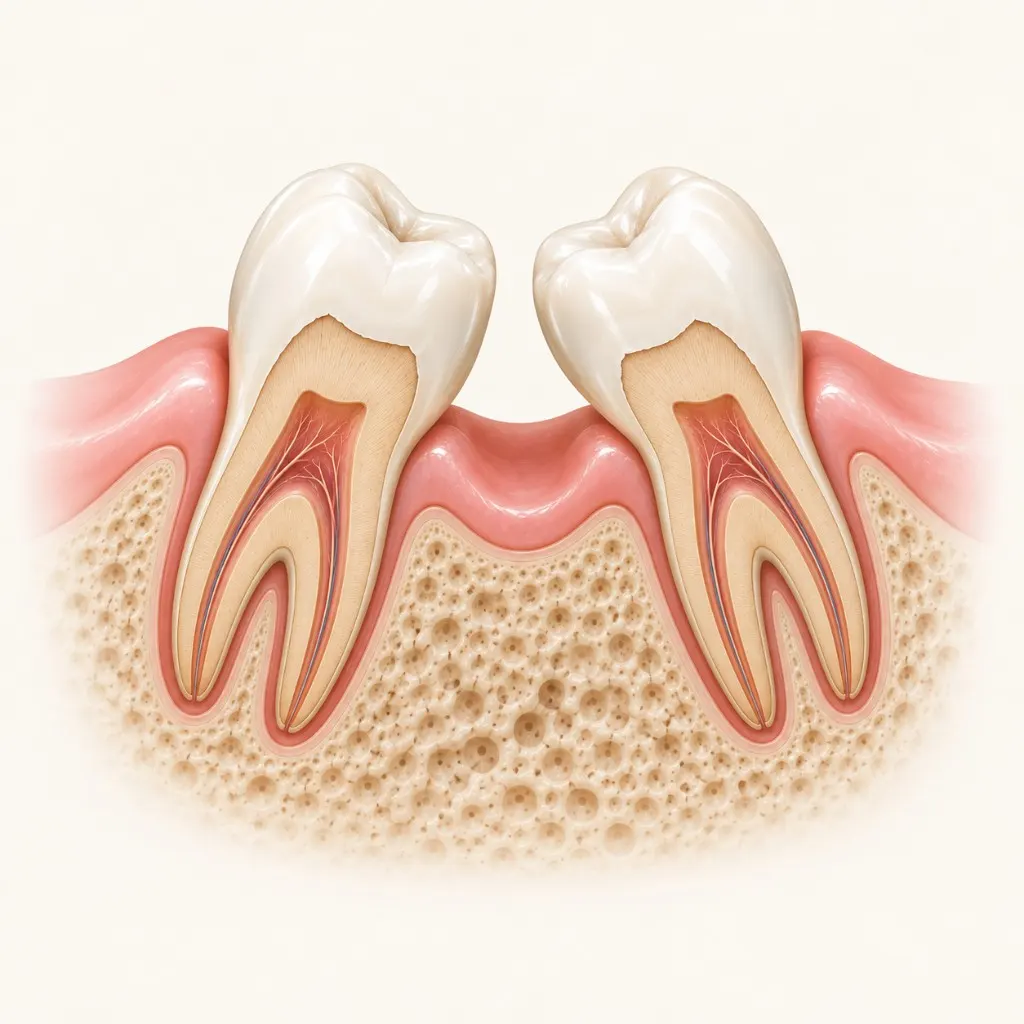
Teeth drifting into a gap
A gap can let neighbouring teeth tilt.
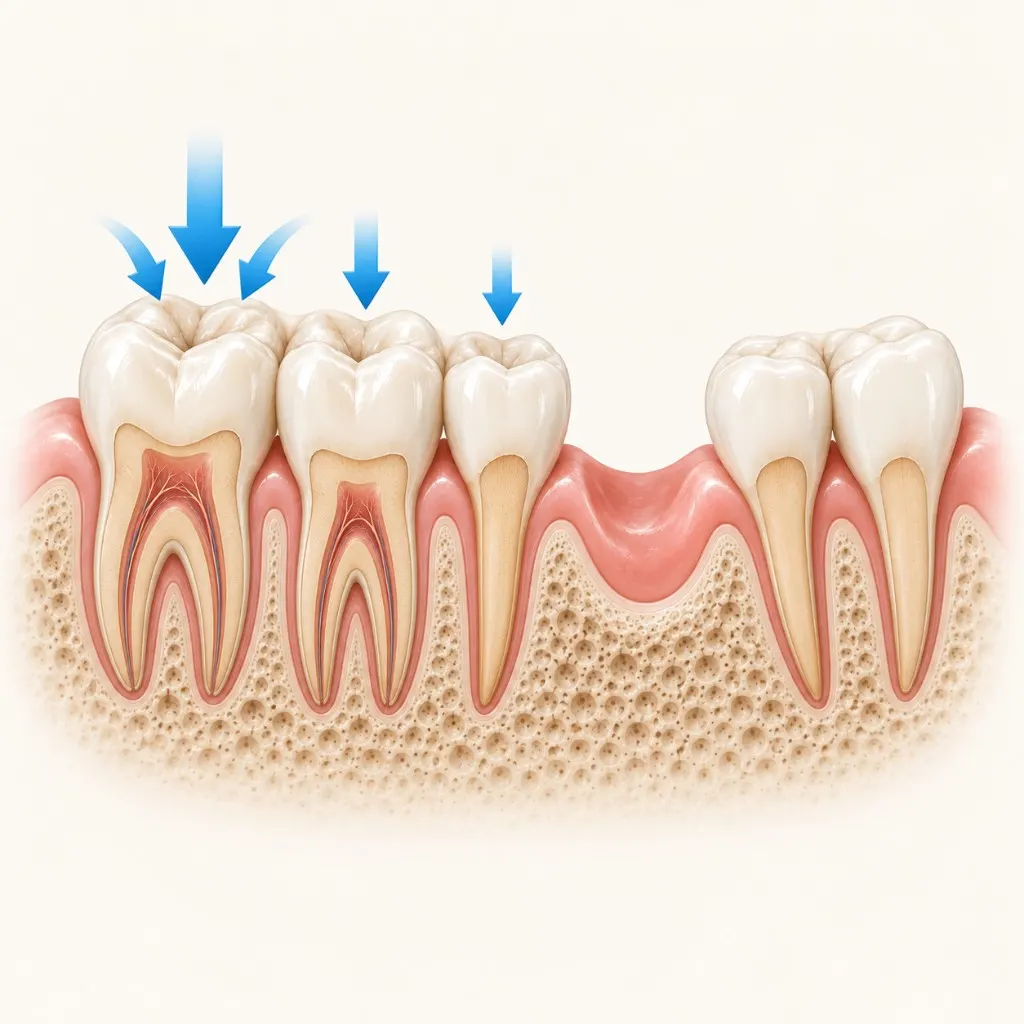
Chewing on one side
Because a gap makes the other side work harder.
These situations can have different causes and solutions. An examination, and sometimes an X-ray, helps determine whether a filling, crown, bridge or another option is appropriate.
What are dental crowns and bridges?
A crown, sometimes called a tooth cap, fits over a tooth like a snug cover. It restores the tooth's shape and strength, and protects what is left of it.
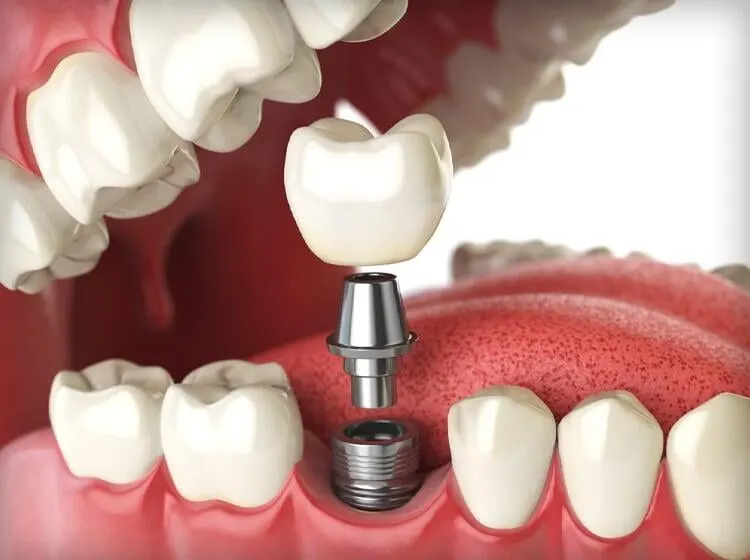
A bridge replaces a missing tooth. A false tooth sits in the gap, and it is held by crowns on the teeth either side. Those teeth act like anchors.
Both are made to match the shape, bite and, where possible, the colour of your own teeth. Both are fixed in place, so they are not taken out at night.
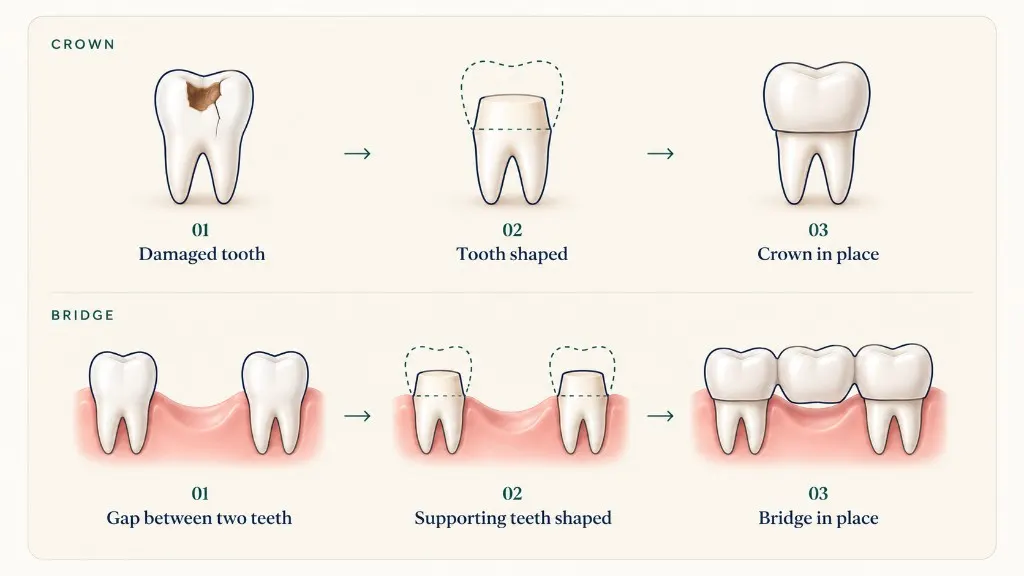
What happens during treatment
Every case is different, and your own plan may vary. This is the general journey.
Examination and X-ray
Dr. Tripathi listens to your concerns, examines your teeth and gums and usually takes an X-ray. He shows you and explains what he finds.
Your plan
You hear your options, what each involves and an estimate of cost. There is no pressure to decide on the day.
Preparing the tooth
The area is numbed, and the tooth is gently shaped to make room for the crown. For a bridge, the teeth beside the gap are shaped.
Impression and temporary
A mould or scan of your teeth is taken so the restoration fits. A temporary crown or bridge may protect the teeth in the meantime.
Fitting and review
The final crown or bridge is checked for fit, bite and appearance, then fixed in place. You receive care advice and a review plan.
The number of visits and timings depend on your case and are explained at your consultation.
Types of restoration
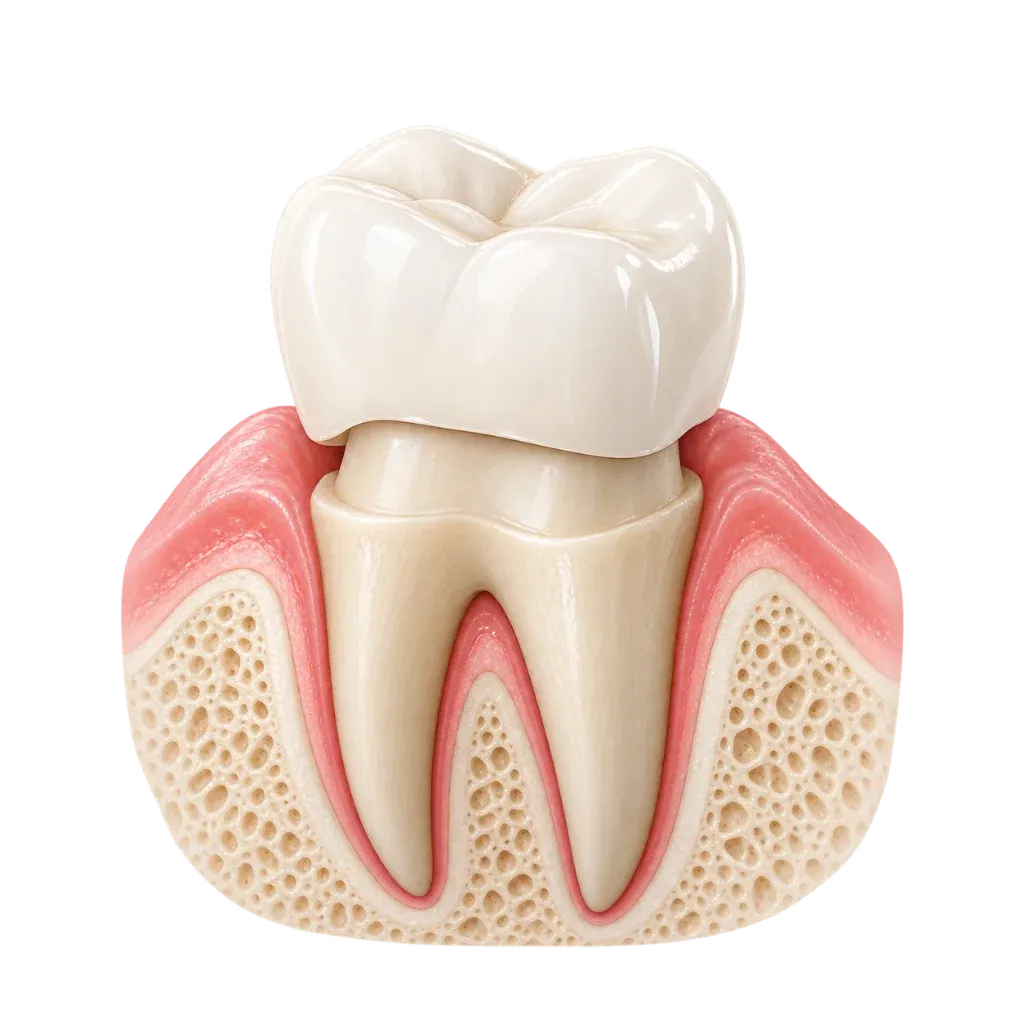
Crown
- What it is
- A cap that covers the whole visible part of a tooth.
- May suit
- A tooth that is heavily filled, cracked, worn or root-treated.
Needs the tooth to be shaped to fit.
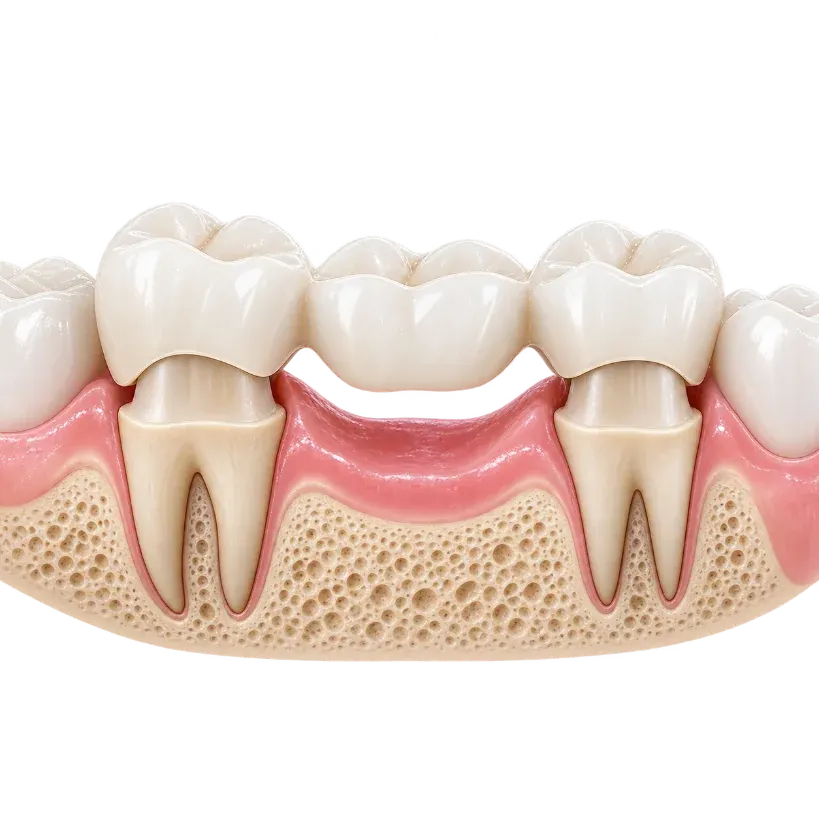
Bridge
- What it is
- A replacement tooth supported by crowns on the teeth either side of a gap.
- May suit
- Someone with a missing tooth and healthy teeth beside the gap.
The neighbouring teeth are shaped to hold it.
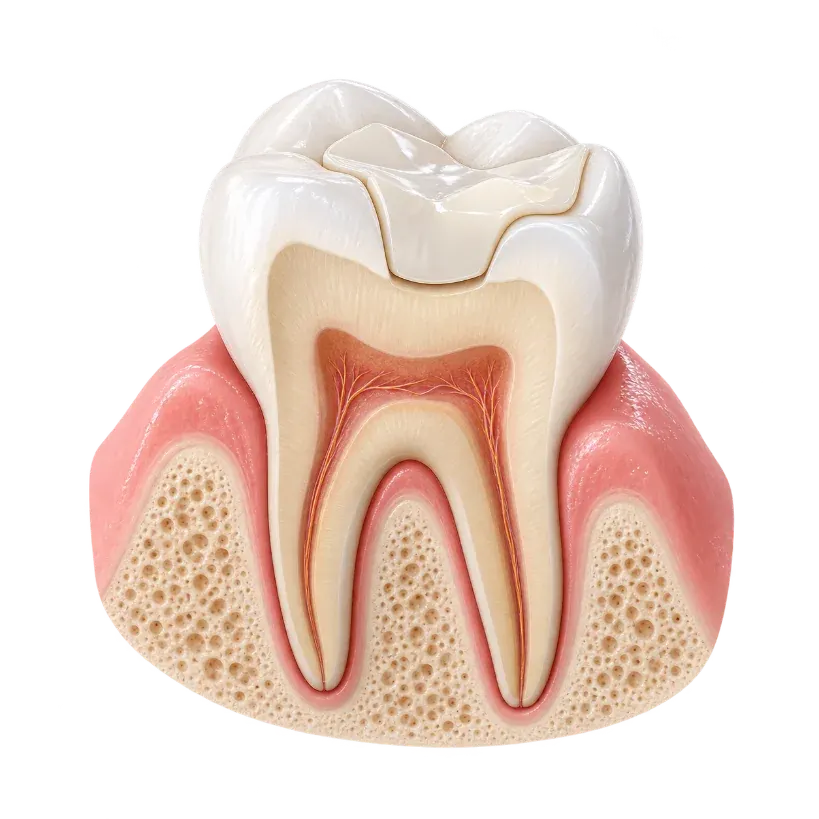
Inlay or onlay
- What it is
- A lab-made piece that fills or covers part of a tooth.
- May suit
- A tooth with moderate damage that does not need a full crown.
Keeps more of the natural tooth than a full crown.
Crowns and bridges can be made from metal, porcelain, ceramics or a combination. Your dentist will explain which are suitable for your tooth, where it sits in your mouth and your bite.
Filling, inlay or onlay, or crown?
| Filling | Inlay or onlay | Crown | |
|---|---|---|---|
| Covers | Part of a tooth, placed directly | Part of a tooth, made to fit | The whole visible tooth |
| Tooth removal | The least | Moderate | The most, because the tooth is shaped |
| Strength it adds | Limited | More | The most protection |
| Visits | Often one | Usually more than one | Usually more than one |
| Suits | Smaller areas of damage | Moderate damage | Heavily damaged, cracked or root-treated teeth |
The right option depends on how much healthy tooth is left, your bite and your clinical assessment. A bigger restoration is not automatically better.
Comparing a bridge with an implant for a missing tooth? The two are compared side by side on the dental implants page. Dental implants
Is it right for me?
Treatment is never chosen automatically. Your dentist will look at:
- 01
How much healthy tooth remains
This decides what can be rebuilt.
- 02
The X-ray
What it shows around the roots and in the bone.
- 03
Your gums
Healthy gums are needed to support any restoration.
- 04
Your bite
How the tooth meets the teeth opposite, and whether you clench or grind.
- 05
The teeth beside a gap
Whether they are strong enough to support a bridge.
- 06
Your goals
Including appearance and how long you want the treatment to last.
If a smaller treatment would do, or if something can wait, Dr. Tripathi will say so. You can take time to decide.

Feeling comfortable
The teeth are numbed before they are shaped, so you should not feel sharp pain. You may notice pressure, vibration or the sound of the handpiece.
Tell Dr. Tripathi if anything is uncomfortable, and he can pause. Questions are always welcome, and you can ask to see what he is looking at.
Your teeth may be sensitive for a while afterwards. This is common, and your dentist will explain what to expect.
Why Roots & Pulp?
Dental care should feel clear, thoughtful and personal.
We listen first
Good treatment starts by understanding what brought you in, what is bothering you, and what matters to you.
We explain clearly
You should understand what we found, what your options are, and why a treatment may be recommended.
We treat thoughtfully
Recommendations are based on your individual dental needs rather than a one-size-fits-all approach.
We think beyond today
Prevention, maintenance and long term oral health are part of the same conversation.

ConsultationYour concerns heard first 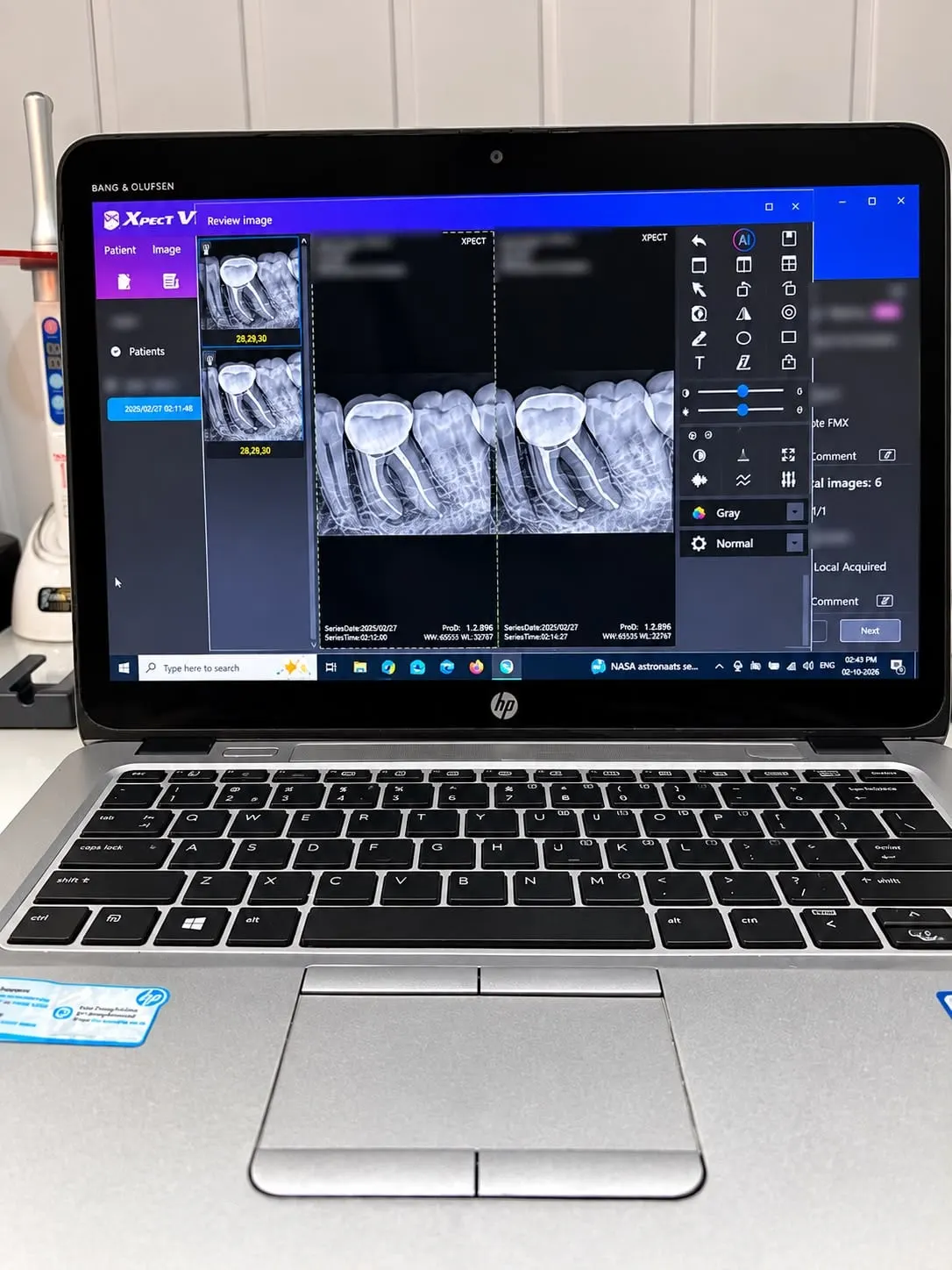
Digital X-ray (RVG)Instant X-rays on screen 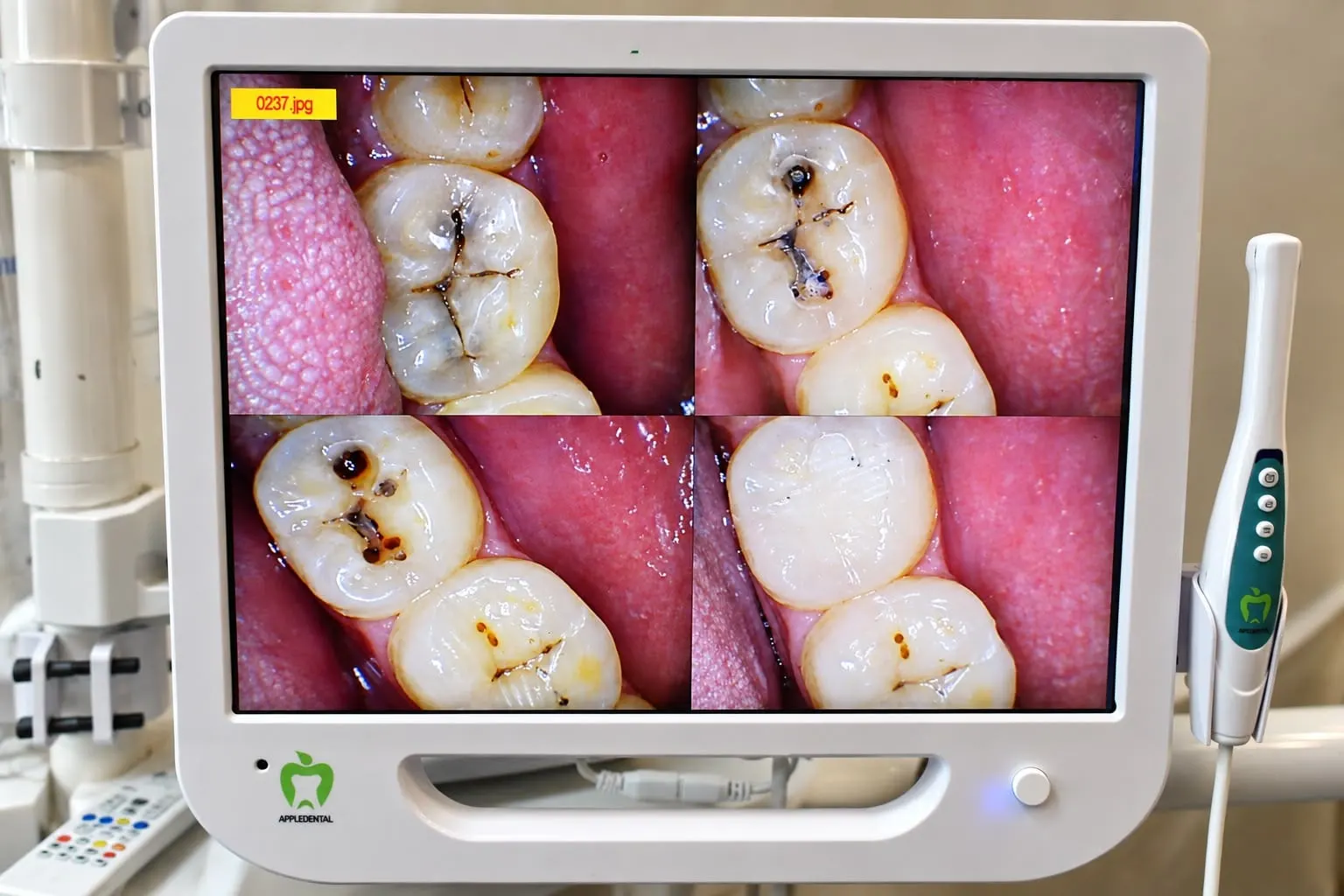
Intraoral CameraSee cavities on screen with your dentist
Examination at Roots & Pulp. See more in the gallery

Meet your dentist
Dr. Shubham Tripathi
- BDS, MPH. Founder & Director.
- Life Member, Indian Dental Association.
- Reg. No. 20606, U.P. State Dental Council.
Read Dr. Tripathi's profile“Dental treatment can feel confusing. Findings, options and the reasoning behind a treatment plan are explained in simple, understandable terms.”
Afterwards: what to expect
Your dentist's instructions always come first. This is general guidance.
- 01
Straight after
Numbness wears off over a few hours. Take care not to bite your lip or cheek, and avoid very hot drinks until feeling returns.
- 02
While you have a temporary
It is not as strong as the final one. Avoid sticky or hard food on that side, and clean gently.
- 03
Getting used to it
The new tooth may feel slightly different at first. If your bite feels too high or uncomfortable, ask for it to be adjusted. Do not just wait for it to settle.
- 04
Long term
A crown protects the tooth, but the edges can still decay. Clean carefully around it, and under a bridge, as your dentist shows you. Keep up with check-ups.
Attend your review. A small adjustment early is easier than a problem later.
When should I contact my dentist?
Please call the clinic if you notice:
- a crown, bridge or temporary that has come off or feels loose (keep it safe and bring it with you)
- a bite that feels too high, or a sharp edge
- pain that is getting worse, or that does not settle
- swelling of the gum or face
- a bad taste or a pimple-like spot near the tooth
For difficulty breathing or swallowing, or swelling spreading toward the eye or neck, seek emergency medical care straight away.
What affects the cost of crowns and bridges?
We do not publish a fixed price, because it depends on your teeth. The main factors are:
- 01
How many teeth
One crown, several, or a bridge with more than one false tooth.
- 02
The type of restoration
A crown, bridge, inlay or onlay.
- 03
The material
Materials differ in look, strength and cost.
- 04
Preparation
Whether the tooth needs a root canal, a build-up or gum treatment first.
- 05
Imaging
The X-rays needed to plan and check the work.
- 06
Laboratory work
Restorations are made to fit your teeth.
After an examination, Dr. Tripathi gives you a clear plan and estimate before treatment begins.
Common questions
Straight answers about crowns and bridges. For anything else, call or send a WhatsApp message.
The tooth is numbed before it is shaped, so you should not feel sharp pain. You may feel pressure or vibration. Some sensitivity afterwards is common. If anything is uncomfortable, tell Dr. Tripathi and he can pause or adjust.
A large filling, a cracked or worn tooth, or a root canal can all lead a dentist to recommend one. A smaller treatment is sometimes enough. Only an examination, and often an X-ray, can tell which.
It depends on the case. Crowns and bridges are usually made to fit your teeth, so treatment often takes more than one visit. Your dentist will outline what to expect once he has examined you.
Cost depends on the number of teeth, the type of restoration, the material, any preparation needed and the imaging. After an examination at our Aliganj clinic, you will receive a clear plan and estimate before treatment begins.
There is no fixed lifespan. A crown can last for many years with good cleaning and regular check-ups, but the tooth beneath can still decay. Habits such as grinding can also shorten its life, which is why review visits matter.
A filling repairs part of a tooth. A crown covers the whole visible tooth to protect it. A crown suits a tooth with more damage, though it needs more of the tooth to be shaped. Your dentist will advise which fits.
Not necessarily. A bridge does not need surgery and is generally quicker, but it uses the teeth either side of the gap as supports. An implant is supported by the jawbone instead. The right choice depends on your teeth, gums, bone and priorities.
Yes. The crown itself cannot decay, but the natural tooth at its edge can. Cleaning carefully around it, and under a bridge, and attending check-ups helps protect the tooth.
Keep the crown safe, avoid chewing on that side, and call the clinic. Do not try to glue it yourself. We will advise you on next steps. If you have severe pain or swelling, contact us urgently.
Booking ahead means shorter waits, so we recommend calling, WhatsApp or booking online. We are open Monday to Saturday 10:00 AM to 8:00 PM and Sunday 10:00 AM to 5:00 PM.
Not sure whether you need a crown?
A bigger treatment is not always the right one. Come in for an examination, and Dr. Tripathi will explain what your tooth needs and what the options are.
Roots & Pulp Dental Clinic, ED-362, Sector-Q, Aliganj, Lucknow. Near Saraswati Vidya Mandir School. Open seven days.