Prosthodontic Treatments
Dentures in Lucknow
Replace missing teeth with dentures made to fit you comfortably.
Dentures are removable teeth that replace some or all of the teeth you have lost, so you can chew, speak and smile with more confidence. At Roots & Pulp in Aliganj, Dr. Shubham Tripathi will examine your mouth first, explain your options and make sure you know what to expect.
At a glance
- What they replace
- One or several missing teeth, or a full set.
- Two main types
- Partial dentures and complete dentures.
- Removable
- You take them out to clean them.
- Planning
- Starts with an examination, so your dentist can explain what suits you.
- Time
- Making dentures takes several steps over more than one visit. Your dentist will explain what to expect.
Could dentures be relevant to you?
These are common reasons people ask a dentist about dentures.
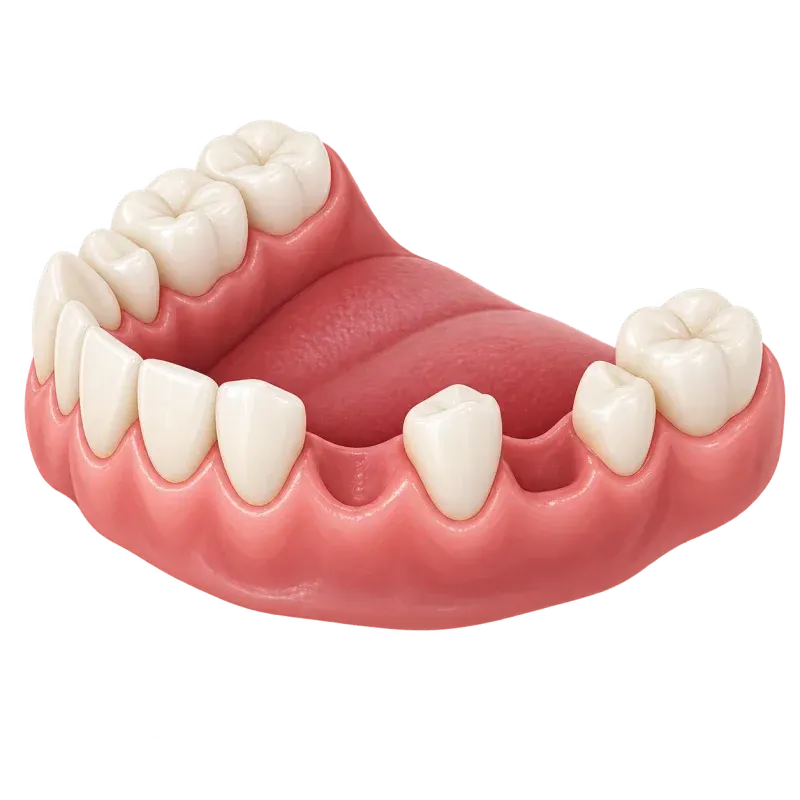
Several missing teeth
Gaps that make chewing difficult.
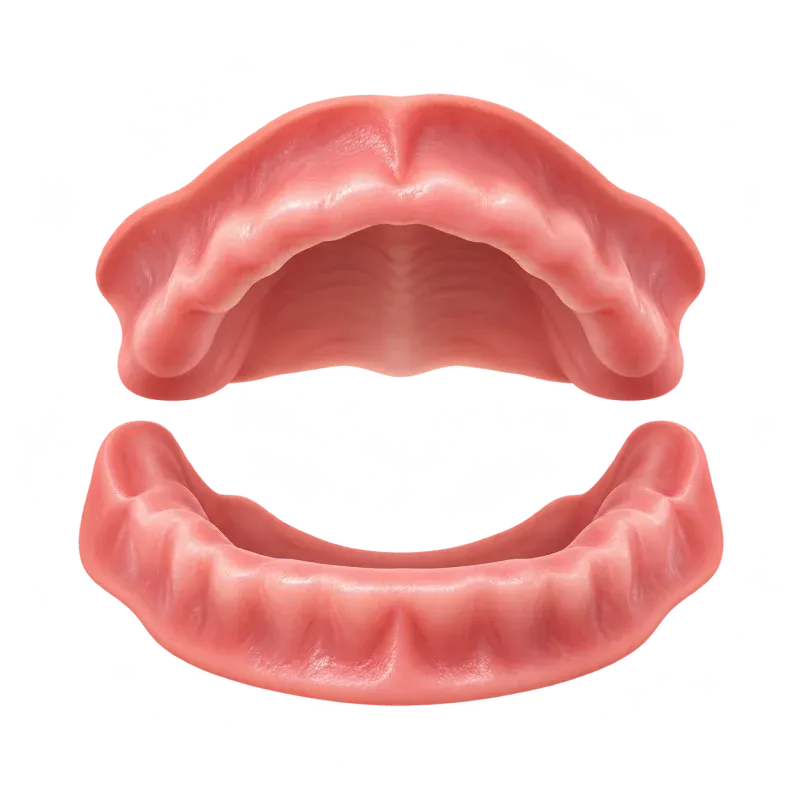
All teeth missing in one or both jaws
A full set may be considered.
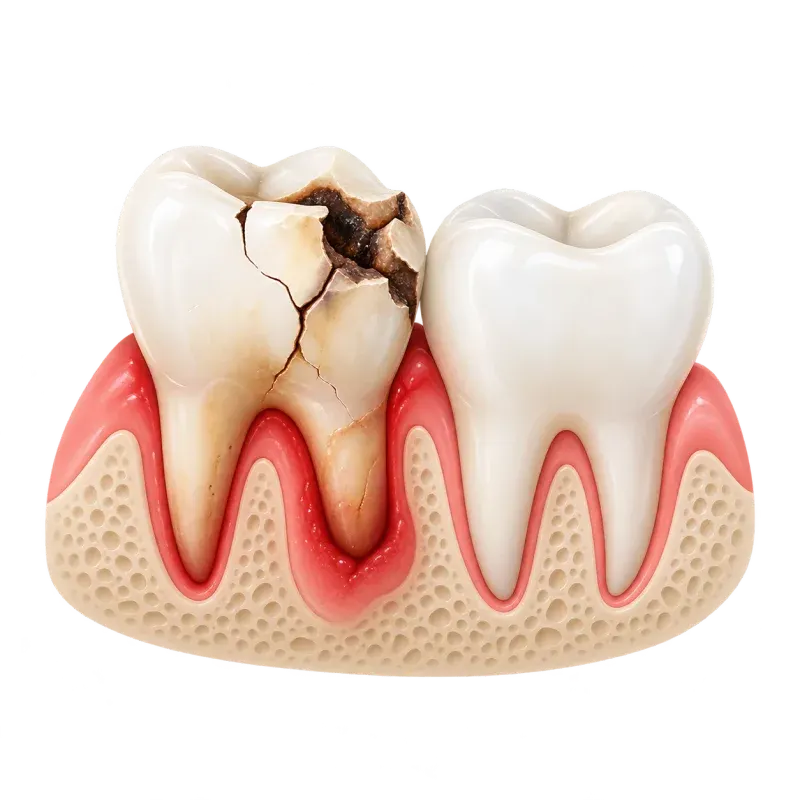
Teeth that cannot be saved
Your dentist may discuss what could replace them.
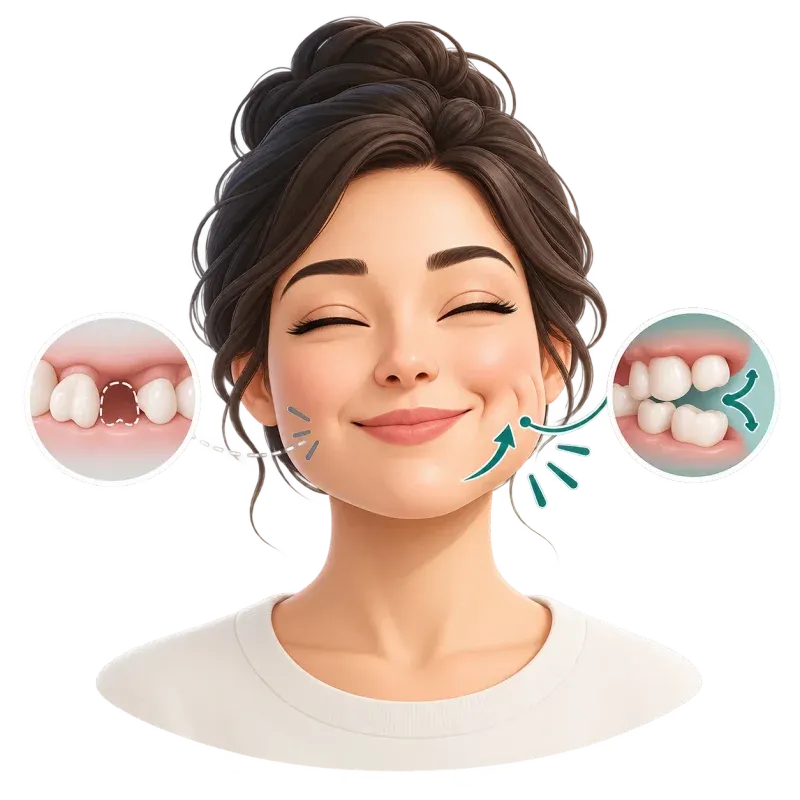
Chewing mostly on one side
Because gaps make the other side work harder.

Changes in speech or in how your face looks
Missing teeth can affect both.
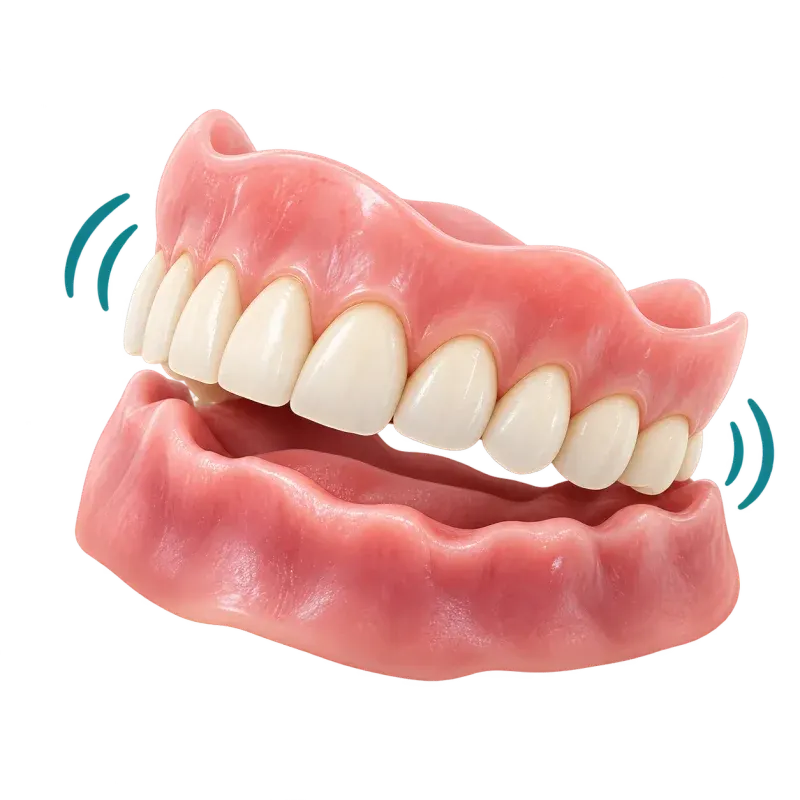
An old denture that no longer fits
Gums change shape over time.
Everyone's situation is different. An examination is needed to find out whether dentures, or another option, would suit you.
What are dentures?
Dentures are replacement teeth, set in a base that rests on your gums. They are made for your mouth, from impressions of your gums and teeth, so they fit you and not a standard shape.
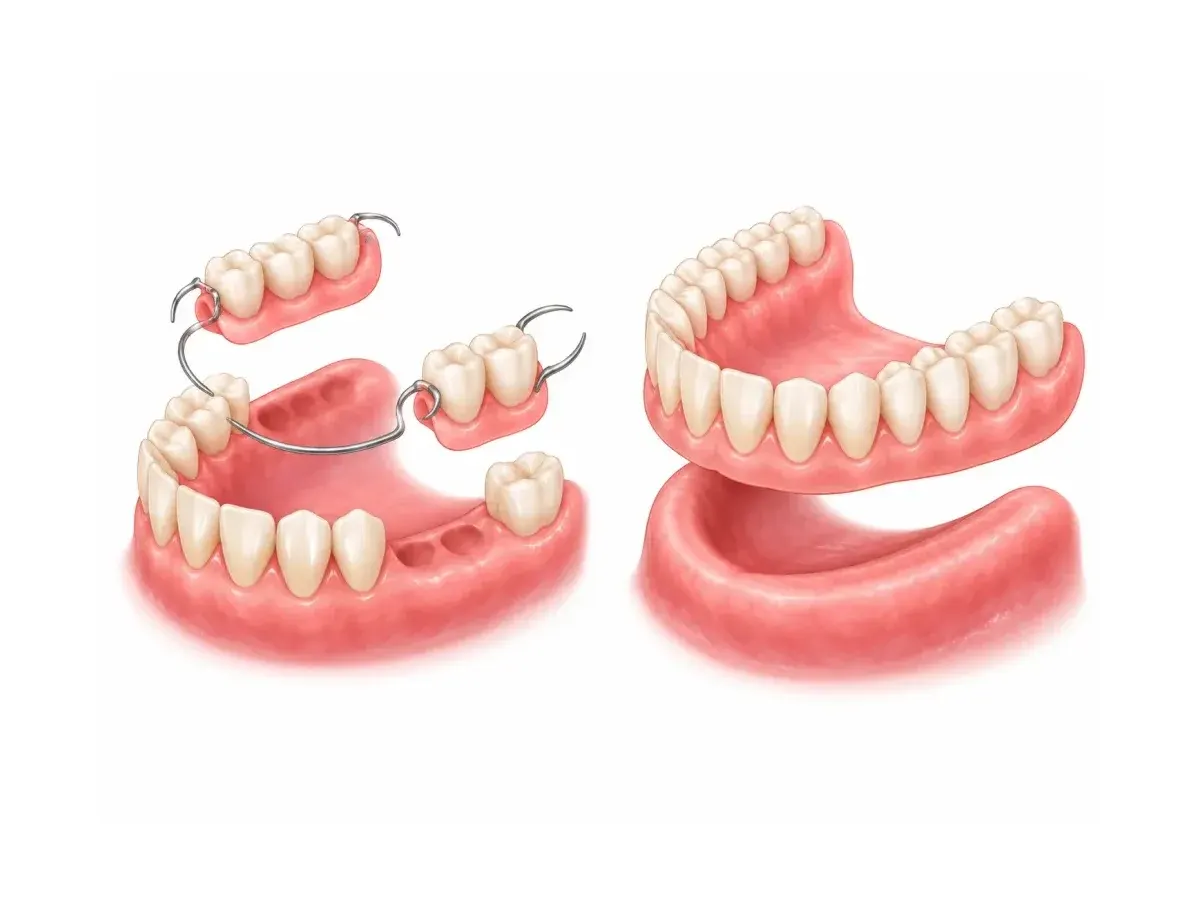
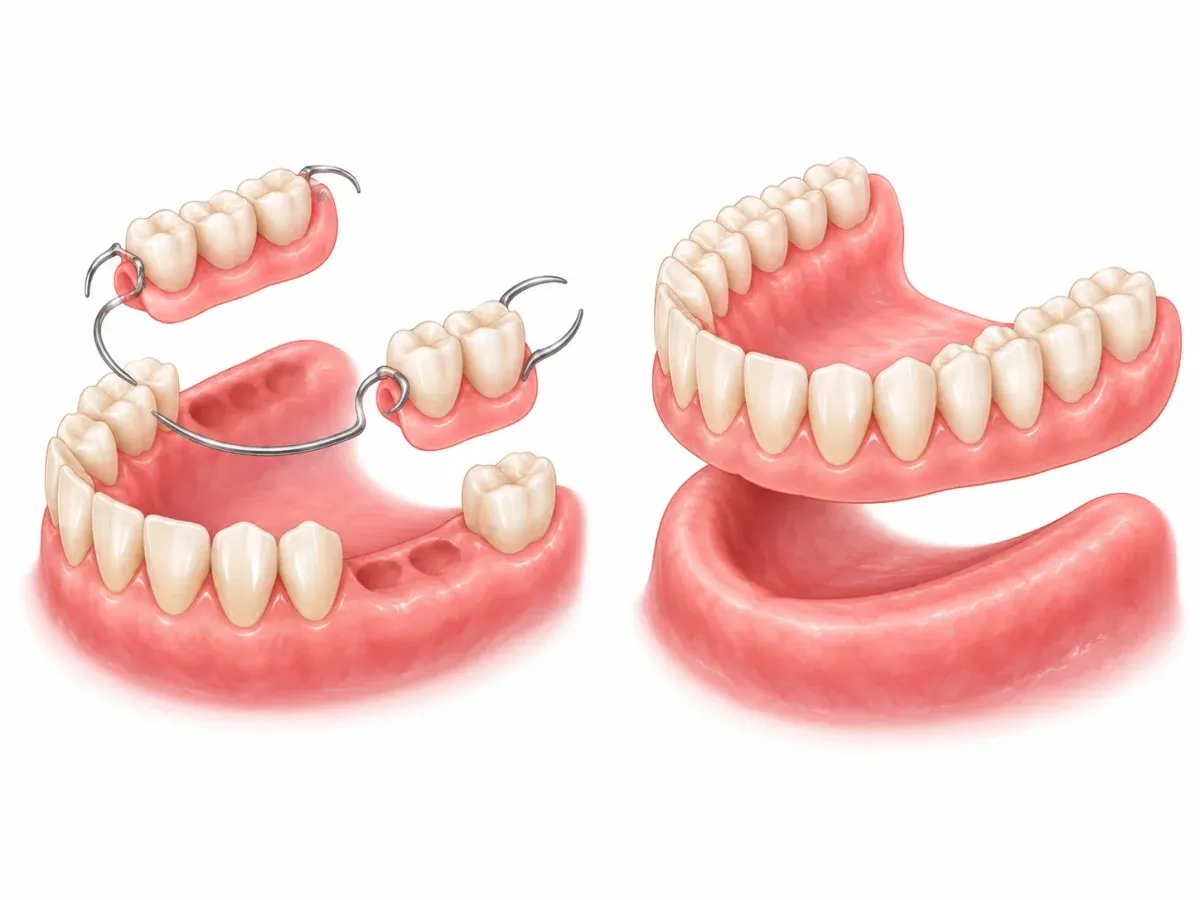
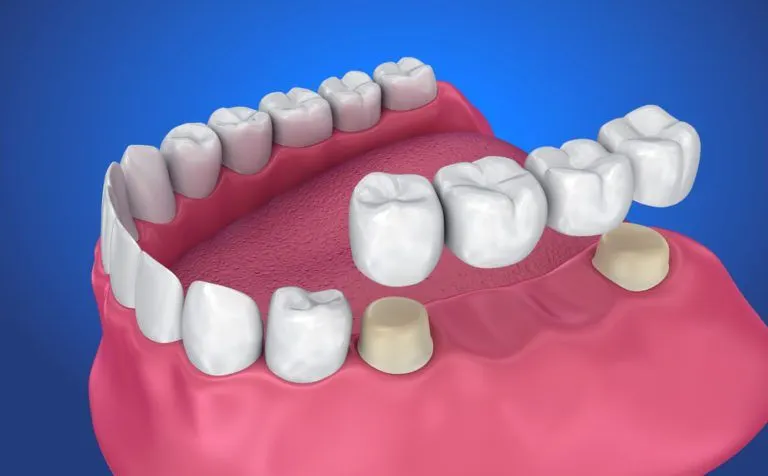
A partial denture fills gaps while you still have some of your own teeth. A complete denture replaces all the teeth in the upper jaw, the lower jaw or both.
They can be taken out for cleaning, and some people also take them out at night. Your dentist will advise what is best for you.
A partial denture fills gaps between your own teeth. A complete denture replaces a full arch. Your dentist will explain what suits you.
What happens during treatment
Every mouth is different, so your own plan may vary. This is the general journey.
Consultation and examination
Dr. Tripathi listens to your concerns, examines your teeth, gums and bite, and usually takes X-rays.
Your plan
You hear your options, what each involves, how long it may take and an estimate of cost. There is no pressure to decide on the day.
Preparing your mouth
If teeth need removing or your gums need treatment, this is done first, and the gums are given time to heal.
Impressions and measurements
Impressions of your gums and teeth are taken, and your bite is recorded, so the denture is made to fit you.
Try-in and fitting
You may try the denture before it is finished, so shape and fit can be checked. The final denture is then fitted, and you are shown how to put it in, take it out and clean it.
Adjustments and review
It is common for a new denture to need small adjustments. You return for check-ups, so any sore spots can be eased.
The number of visits depends on your case and is explained at your consultation.
Types of denture
Partial or Complete dentures
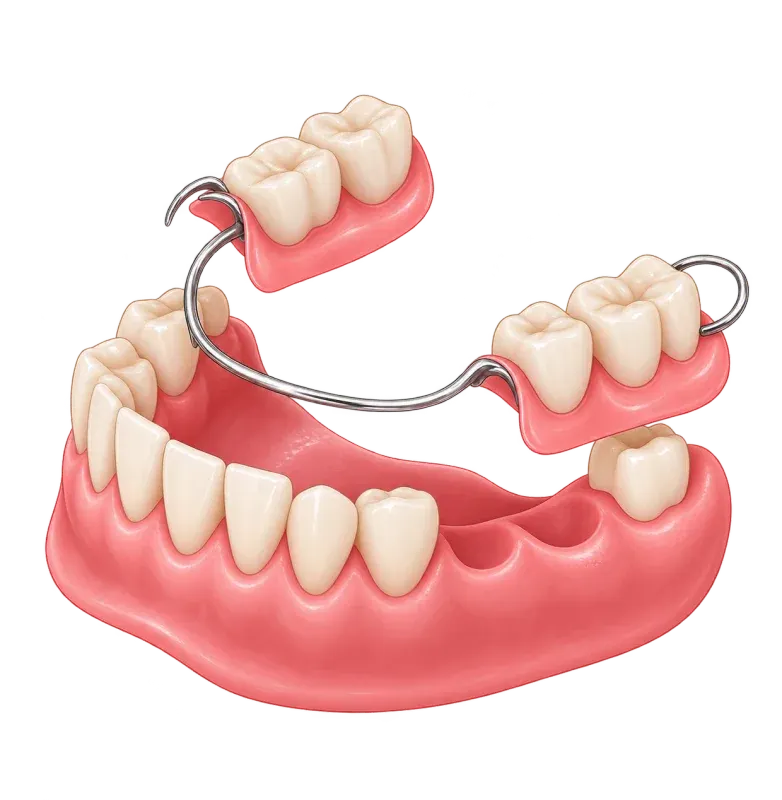
Partial denture
- Replaces
- Some missing teeth
- Your own teeth
- Remain in place and may help hold it
- Held in place by
- Clips or contact with your remaining teeth, and your gums
- Removable
- Yes
- Suits
- People with some healthy teeth remaining
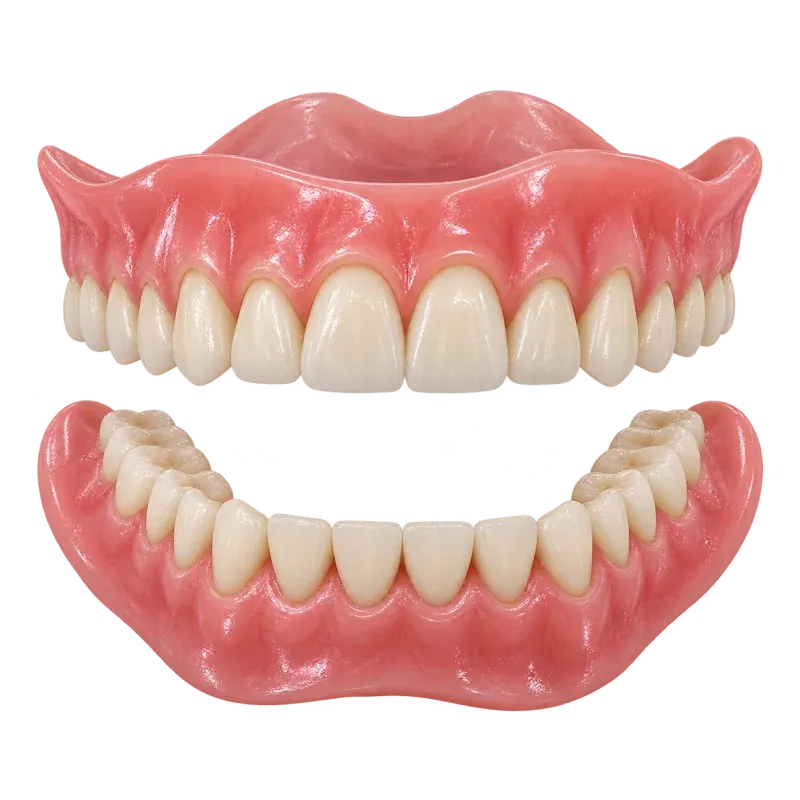
Complete denture
- Replaces
- All teeth in the upper jaw, lower jaw or both
- Your own teeth
- None remaining, so it rests on the gums
- Held in place by
- Close fit to the gums, and suction in the upper jaw
- Removable
- Yes
- Suits
- People with no teeth, or teeth that cannot be saved
The right type depends on your remaining teeth, your gums and clinical assessment. Neither is better in every case.
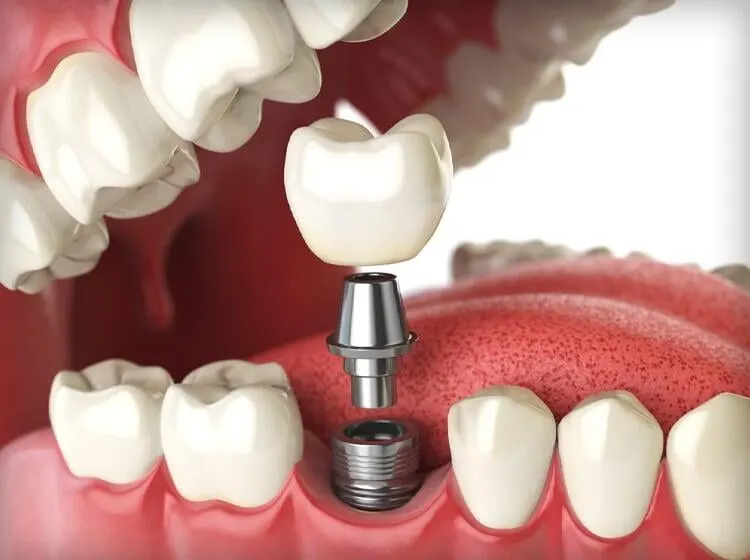
Dentures are removable. If you are comparing them with a bridge or an implant, the three are compared side by side on the dental implants page. Dental implants
How your dentist decides
Your dentures are planned for you. Your dentist will look at:
- 01
Your remaining teeth
Which can be kept, and how healthy they are.
- 02
Your gums and bone
Their shape and the support they give.
- 03
Your bite
How your jaws meet, and how much space there is.
- 04
Your health
Conditions or medicines that affect your mouth. Please tell us about any.
- 05
Your priorities
Comfort, appearance, eating, cost and whether you would prefer a fixed option.
- 06
Whether another option may suit you better
Such as a bridge or implants.
If dentures are not the best answer, Dr. Tripathi will say so. You can take time to decide.
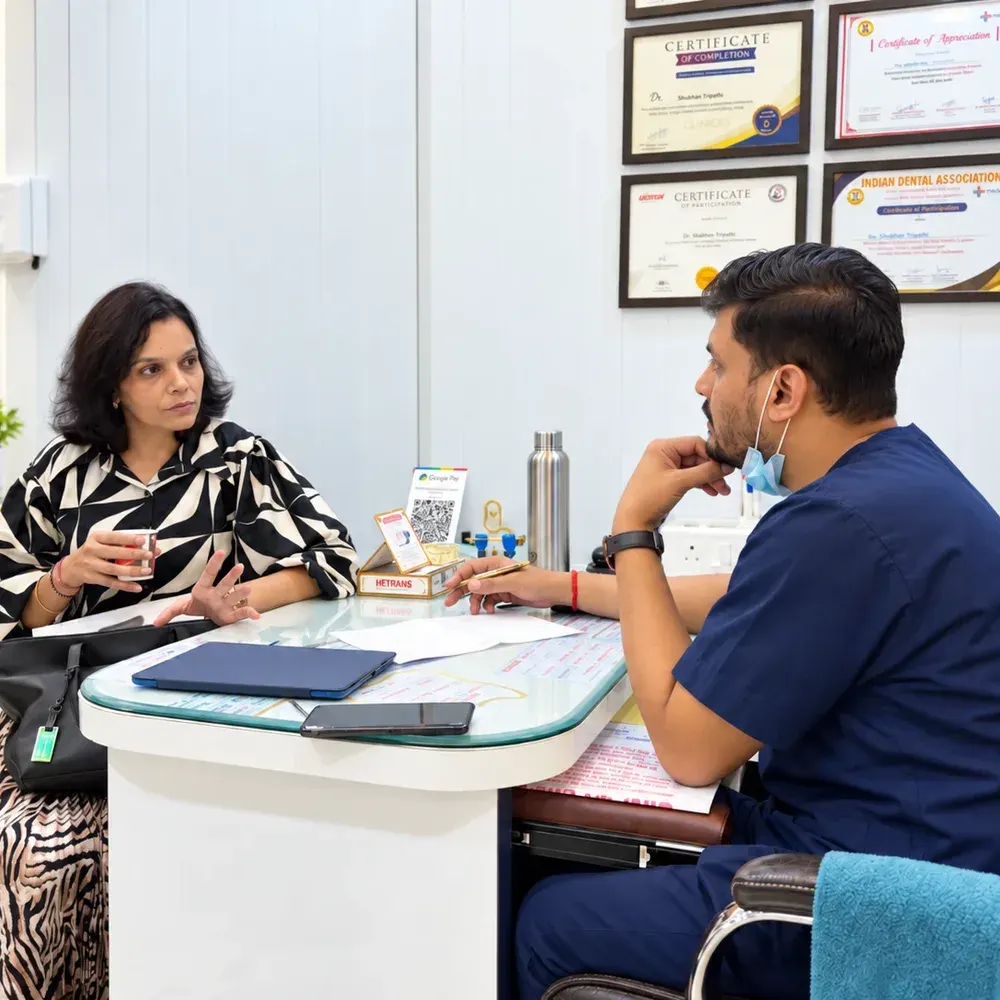
Getting used to your dentures
A new denture feels strange at first, and that is normal. Your mouth needs time to learn it.
You may notice extra saliva, a feeling of fullness, and some difficulty with speaking and chewing. Sore spots can appear, and they can be eased with adjustments, so please do not put up with them.
Many people find it helps to start with soft food cut into small pieces, chew on both sides together, and practise speaking aloud. Your dentist will give you advice, and every mouth adjusts at its own pace.
Why Roots & Pulp?
Dental care should feel clear, thoughtful and personal.
We listen first
Good treatment starts by understanding what brought you in, what is bothering you, and what matters to you.
We explain clearly
You should understand what we found, what your options are, and why a treatment may be recommended.
We treat thoughtfully
Recommendations are based on your individual dental needs rather than a one-size-fits-all approach.
We think beyond today
Prevention, maintenance and long term oral health are part of the same conversation.

Meet your dentist
Dr. Shubham Tripathi
- BDS, MPH. Founder & Director.
- Life Member, Indian Dental Association.
- Reg. No. 20606, U.P. State Dental Council.
Read Dr. Tripathi's profile“Dental treatment can feel confusing. Findings, options and the reasoning behind a treatment plan are explained in simple, understandable terms.”
Caring for your dentures
Your dentist's instructions come first. This is general guidance.
- 01
Clean them every day
Brush your dentures gently, using a method your dentist recommends, and rinse them after meals. Hold them over a basin of water, in case they slip.
- 02
Look after your mouth
Clean your gums, tongue and any remaining teeth too. Plaque on remaining teeth causes decay and gum disease.
- 03
Rest and storage
Your dentist will tell you whether to remove them at night. Keep them in water or a cleaning solution when out, away from very hot water, which can warp them.
- 04
Keep your reviews
Gums and bone change shape over time, so dentures may need adjusting or replacing. Regular check-ups also include a look for any changes in your mouth.
A denture that no longer fits well can cause sores, so please do not wait.
When should I contact my dentist?
Please call the clinic if you notice:
- a sore spot that does not improve within a few days
- a denture that is loose, cracked or broken
- difficulty eating, or the denture rubbing or moving
- a mouth ulcer, white or red patch or lump that has not healed within three weeks
- swelling, pus or bleeding from the gums
For difficulty breathing or swallowing, or swelling spreading toward the eye or neck, seek emergency medical care straight away.
What affects the cost of dentures?
We do not publish fixed prices, because every denture is made for one mouth. The main factors are:
- 01
The type
Partial or complete, and whether one or both jaws.
- 02
How many teeth are replaced
- 03
Materials
Different materials differ in look, strength and cost.
- 04
Preparation
Extractions or gum treatment needed first.
- 05
Visits
Fittings, adjustments and reviews.
- 06
Future care
Repairs, adjustments, relines or replacement over time.
After an examination, Dr. Tripathi will explain your options and give you an estimate before treatment begins.
Common questions
Straight answers about dentures. For anything else, call or send a WhatsApp message.
It varies. Many people feel more comfortable within a few weeks, but chewing and speaking can take longer to feel natural. Sore spots are common at first and can be eased with adjustments, so please come back instead of waiting.
Dentures are made to fit your mouth, and the shape and shade of the teeth are chosen with you. No one can promise exactly how they will look, so Dr. Tripathi will discuss what is realistic before you begin.
Most people can eat a wide range of foods once they have adjusted, although chewing is generally less firm than with natural teeth. Start with soft food cut into small pieces, and chew on both sides at once. Your dentist will advise.
A well-fitted denture should feel stable, but some movement is possible, particularly lower dentures, because the lower jaw has less to hold on to. If a denture feels loose, tell us, as it may need adjusting.
Many dentists advise taking them out at night, to rest the gums and keep them clean, but it depends on your mouth. Your dentist will tell you what is best for you.
There is no fixed lifespan. Gums and bone change shape over time, so dentures may need adjusting, relining or replacing. Regular check-ups let your dentist spot when this is needed.
A partial denture fills gaps while you still have some natural teeth. A complete denture replaces all the teeth in a jaw. Which one you need depends on how many healthy teeth you have left.
Neither is better for everyone. Dentures are removable and usually a shorter process. Implants are fixed but need surgery, healing time and enough healthy bone. Dr. Tripathi will explain which suits you.
It depends on the type, how many teeth are replaced, the materials, any preparation such as extractions, and the number of visits. After an examination at our Aliganj clinic, you will be told the cost before you begin.
Booking ahead means shorter waits, so we recommend calling, WhatsApp or booking online. We are open Monday to Saturday 10:00 AM to 8:00 PM and Sunday 10:00 AM to 5:00 PM.
Missing teeth? Let us talk through your options
Dentures are one of several ways to replace teeth, and the right one depends on you. Come in for an examination, and Dr. Tripathi will explain what could work and what to expect.
Roots & Pulp Dental Clinic, ED-362, Sector-Q, Aliganj, Lucknow. Near Saraswati Vidya Mandir School. Open seven days.