Prosthodontic Treatments
Dental Implants in Lucknow
A fixed way to replace a missing tooth, anchored in the jawbone.
A dental implant is a small post placed in the jaw to support a replacement tooth. It is one of several ways to fill a gap, and it is not right for everyone. At Roots & Pulp in Aliganj, Dr. Shubham Tripathi will examine you first and explain which options may suit you.
At a glance
- What it replaces
- One missing tooth, several teeth, or in some cases a full set, depending on your case.
- How it works
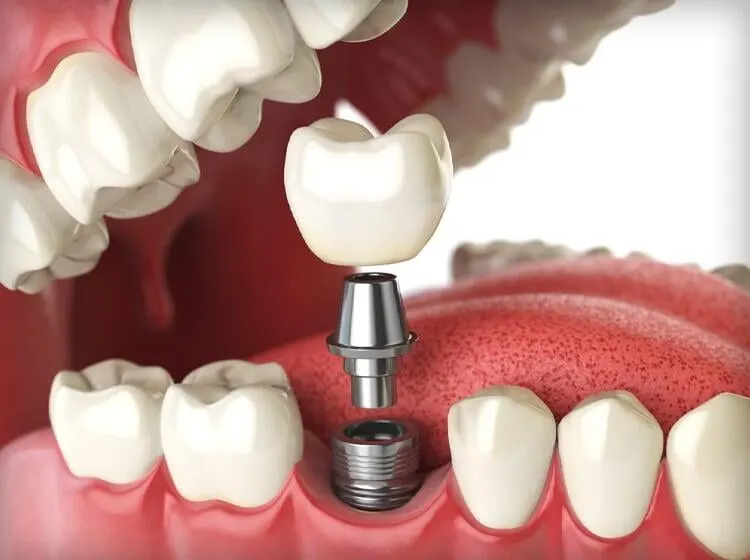
- A post is placed in the jawbone, and a crown or other restoration is attached to it.
- Planning
- Starts with an examination and imaging, so your dentist can check gums, bone and bite.
- Time
- Healing is part of the process, and it varies from person to person. Your dentist will explain what to expect for you.
- Alternatives
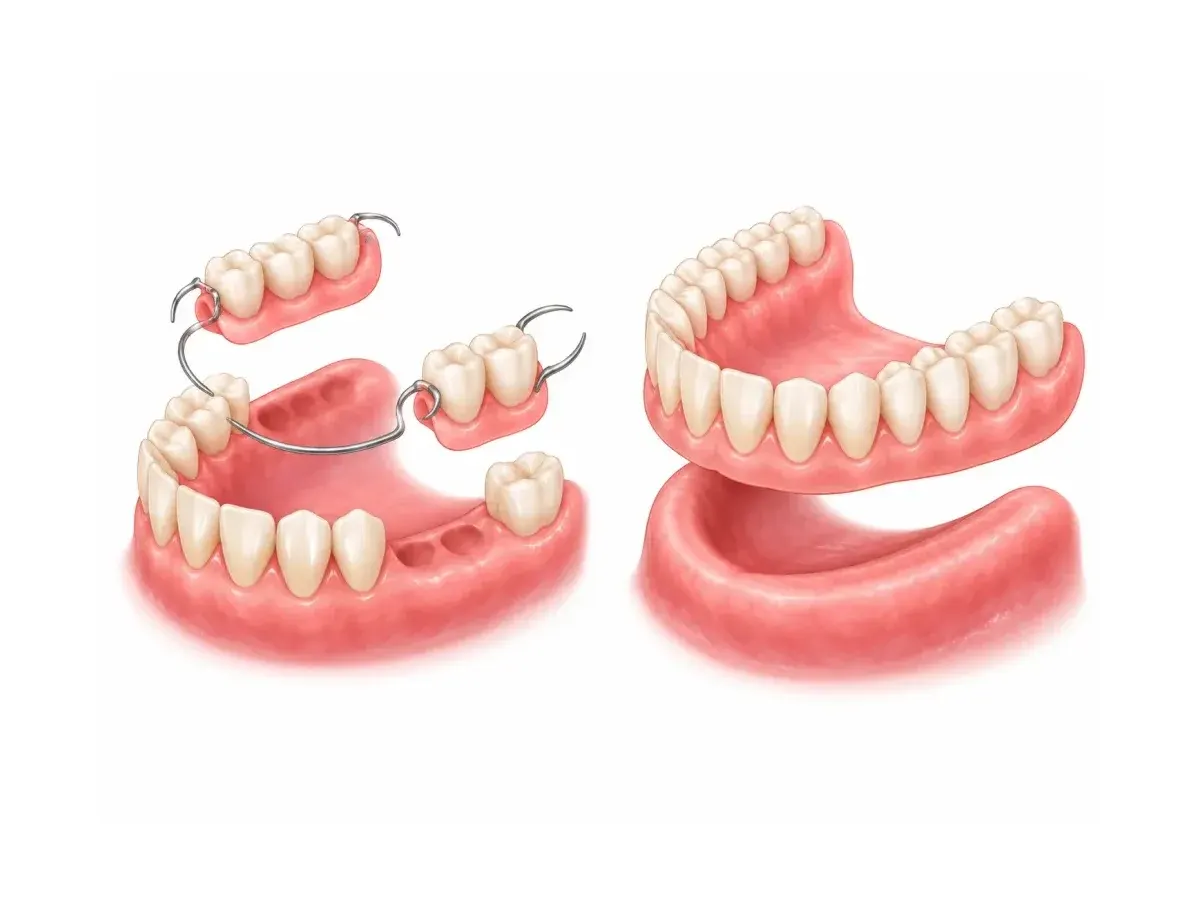
- Bridges and dentures are other options. The right one depends on your situation.
Could dental implants be relevant to you?
These are common situations in which people ask a dentist about implants.
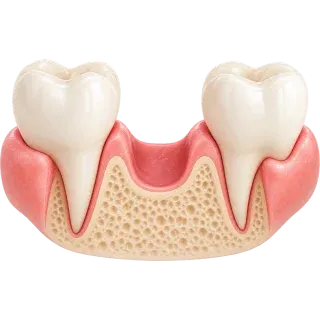
A missing tooth
From an extraction, an injury or a tooth that was never there.
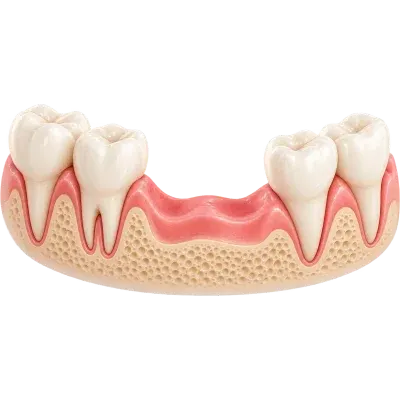
Several missing teeth
Gaps that make chewing or speaking harder.
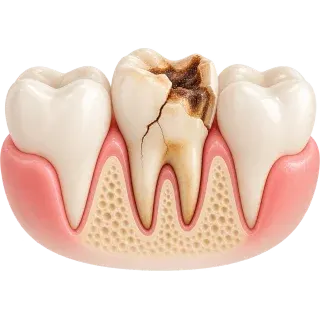
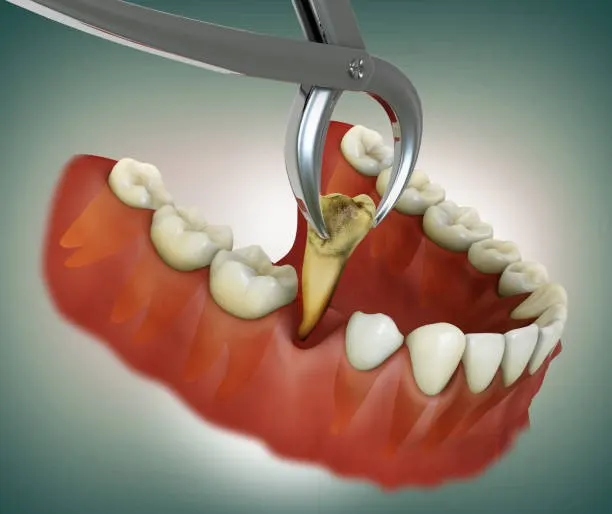
A tooth that cannot be saved
Your dentist may discuss what could replace it.
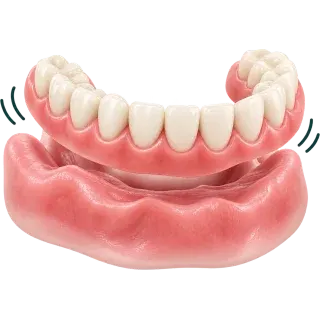
Difficulty with dentures
Removable dentures that feel loose or uncomfortable.
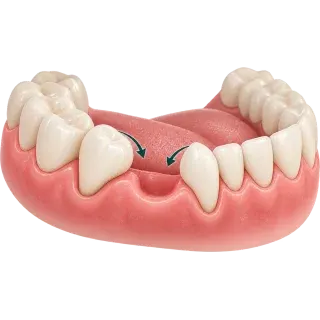
Gaps affecting your bite
Teeth drifting or tilting into an empty space.
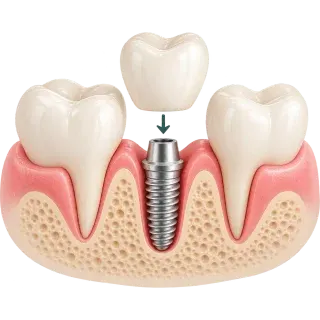
Wanting to avoid shaping healthy neighbouring teeth
One reason people compare implants with bridges.
Everyone's situation is different. An examination and imaging are needed to find out whether implants, or another option, would suit you.
What is a dental implant?
Think of a tooth in two parts: the crown you see, and the root hidden in the jaw. When a tooth is lost, the root goes too.
A dental implant replaces the root. It is a small post, usually made of titanium, placed in the jawbone. Over time, the bone can grow around it and hold it in place.
A connector and a crown are then attached on top. The result is a tooth that is fixed in place, not removed at night like a denture.
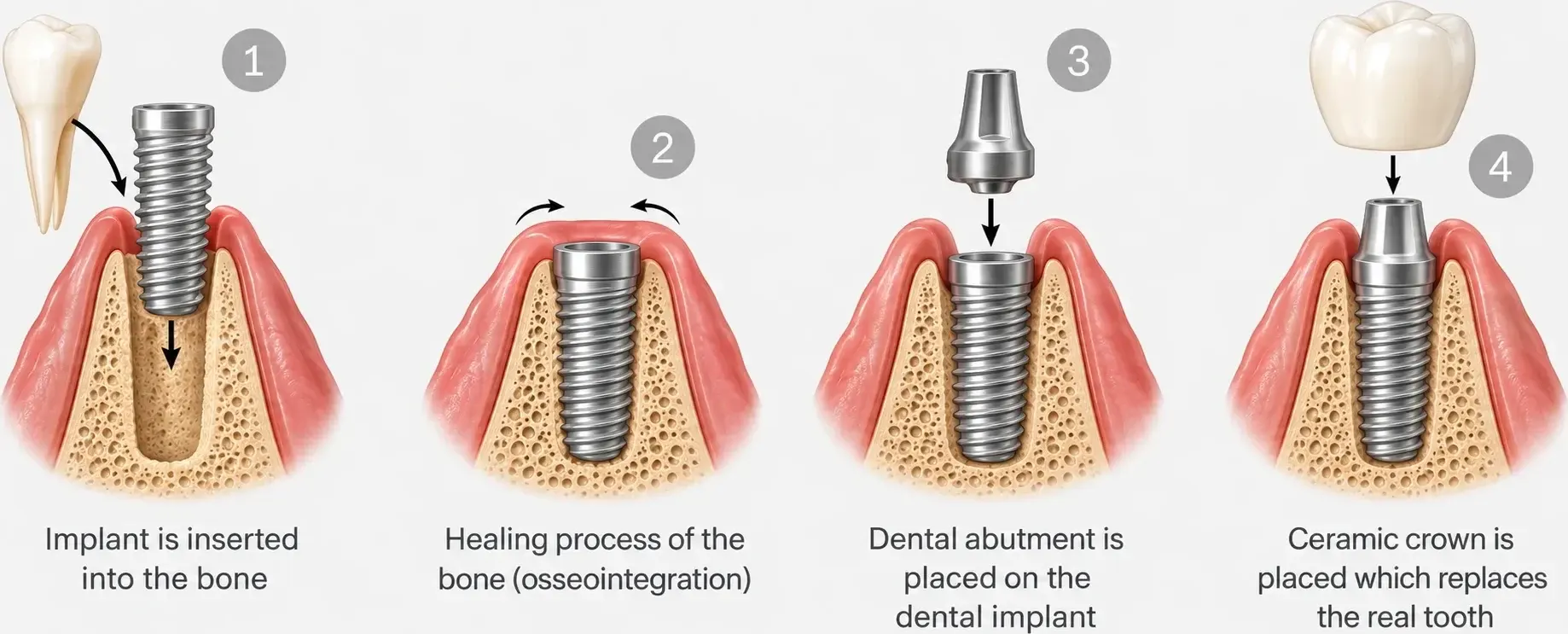
What the implant journey can look like
Every case is different, and some steps may not apply to you. This is a general overview.
Consultation
Dr. Tripathi listens to your concerns, asks about your health and examines your mouth. He explains what he finds.
Imaging and planning
X-rays or other imaging help your dentist assess the bone and nearby teeth. You then hear your options, and an estimate of cost.
Preparing the area, if needed
Sometimes a tooth needs removing, gum disease treating or bone building up before an implant can be placed.
Placing the implant
The area is numbed, and the implant post is placed in the jawbone.
Healing
The bone needs time to settle around the implant. This period varies. A temporary solution may be discussed for the gap.
The crown and review
Once healing is checked, a crown is attached and your bite is adjusted. You receive care advice and a review plan.
Timeframes and number of visits depend on your case and are explained at your consultation.
Types of implant treatment
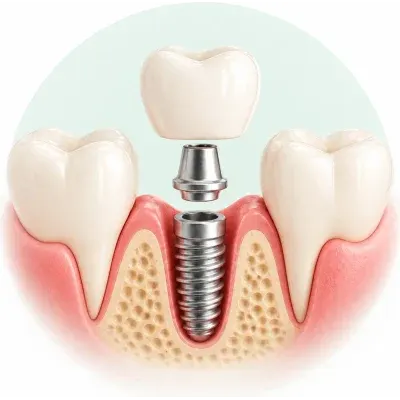
Single tooth implant
- What it is
- One implant and crown to replace one tooth.
- May suit
- Someone missing a single tooth, with healthy neighbouring teeth.
Leaves the neighbouring teeth untouched.
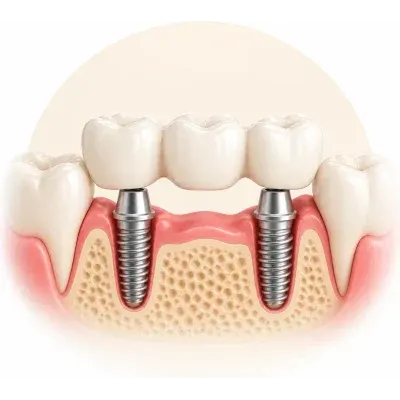
Multiple tooth implants
- What it is
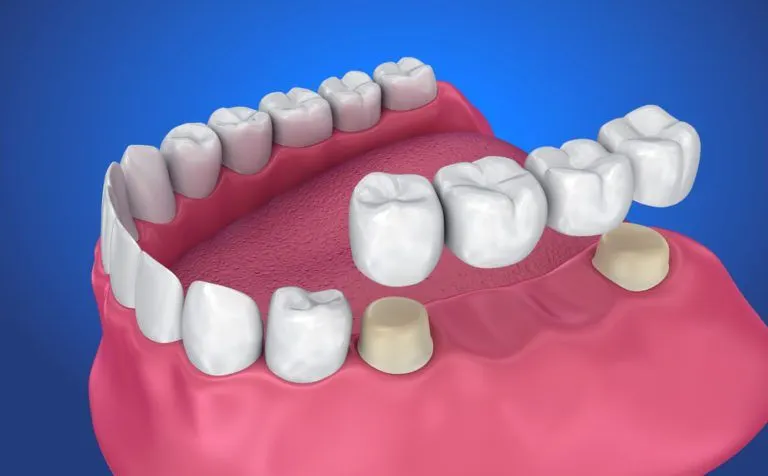
- Implants that support a bridge or several crowns across a gap.
- May suit
- Someone missing several teeth in a row.
One implant can often support more than one tooth, depending on the case.
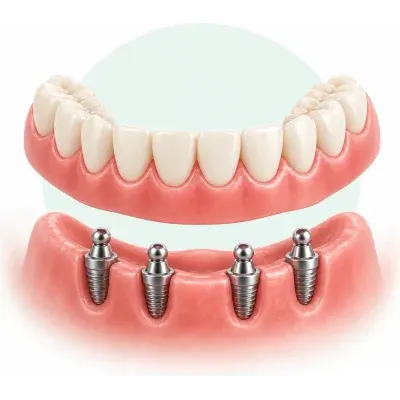
Implant-supported dentures
- What it is
- A denture that clips or attaches to implants.
- May suit
- Someone with many or all teeth missing, or who struggles with loose dentures.
More stable than a standard denture, but a different treatment.
Implant, bridge or denture?
| Dental implant | Dental bridge | Denture | |
|---|---|---|---|
| How it works | A post in the jawbone supports a crown | A crown on each side holds a replacement tooth in the gap | A removable set that rests on the gums |
| Removable | No | No | Yes |
| Neighbouring teeth | Left untouched | Usually reshaped to hold the bridge | Not reshaped, though some partials clip onto teeth |
| Surgery | Yes, a minor surgical step | No | No |
| Treatment time | Longer, because of healing | Generally shorter | Generally shorter |
| Upkeep | Cleaning, as with natural teeth, plus check-ups | Careful cleaning under the bridge | Daily removal and cleaning |
| Suits | Enough healthy bone and gums | Healthy teeth either side of the gap | Many missing teeth, or when surgery is not suitable |
The right option depends on your oral health, priorities and clinical assessment. No option is best for everyone.
Is it right for me?
Implants are planned individually. Your dentist will look at:
- 01
Bone
Whether there is enough, and whether it is healthy.
- 02
Gums
Gum disease should be treated before an implant is placed.
- 03
Your general health
Some conditions and habits, such as smoking, can affect healing.
- 04
Your bite
How the new tooth will meet the teeth opposite it.
- 05
The missing tooth
Its position, and the space and teeth around it.
- 06
Your age and growth
Implants are generally considered once the jaw has finished growing.
If implants are not right for you, Dr. Tripathi will say so, and explain other options. You can take time to decide.

Feeling comfortable
Surgery is a big word, and it is natural to feel nervous about it. Questions are welcome at any point.
The area is numbed for placement, and you can tell Dr. Tripathi if you feel anything during it. Afterwards, some tenderness or swelling is common, and your dentist will explain what to expect.
Why Roots & Pulp?
Dental care should feel clear, thoughtful and personal.
We listen first
Good treatment starts by understanding what brought you in, what is bothering you, and what matters to you.
We explain clearly
You should understand what we found, what your options are, and why a treatment may be recommended.
We treat thoughtfully
Recommendations are based on your individual dental needs rather than a one-size-fits-all approach.
We think beyond today
Prevention, maintenance and long term oral health are part of the same conversation.
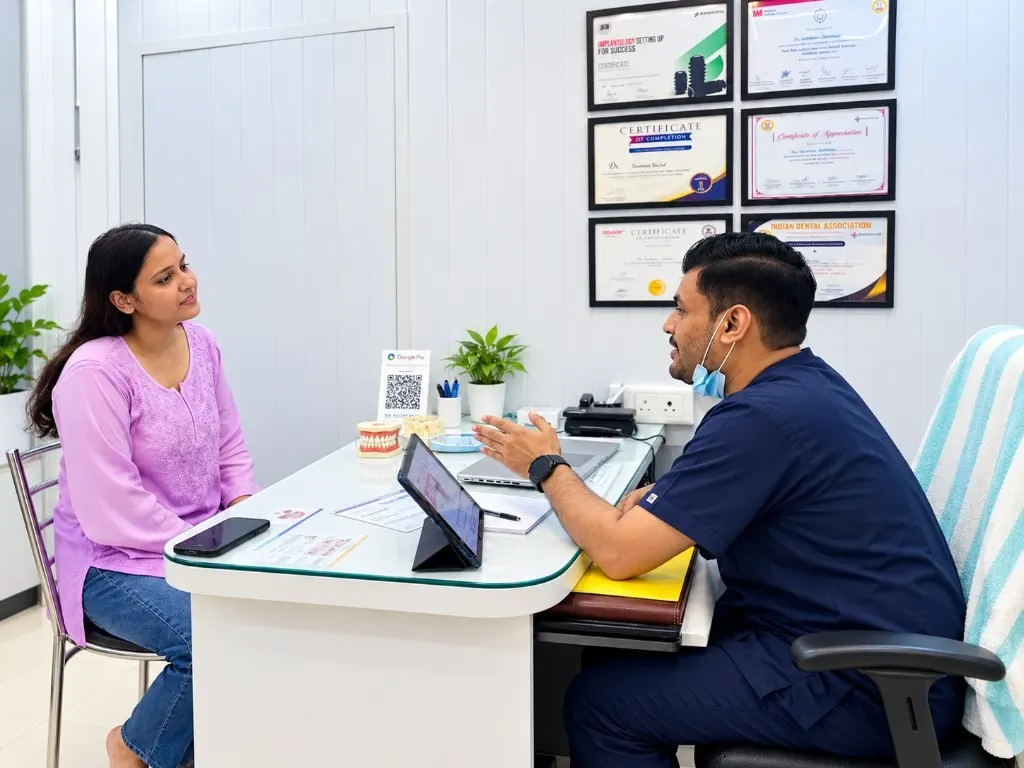
ConsultationYour concerns heard first 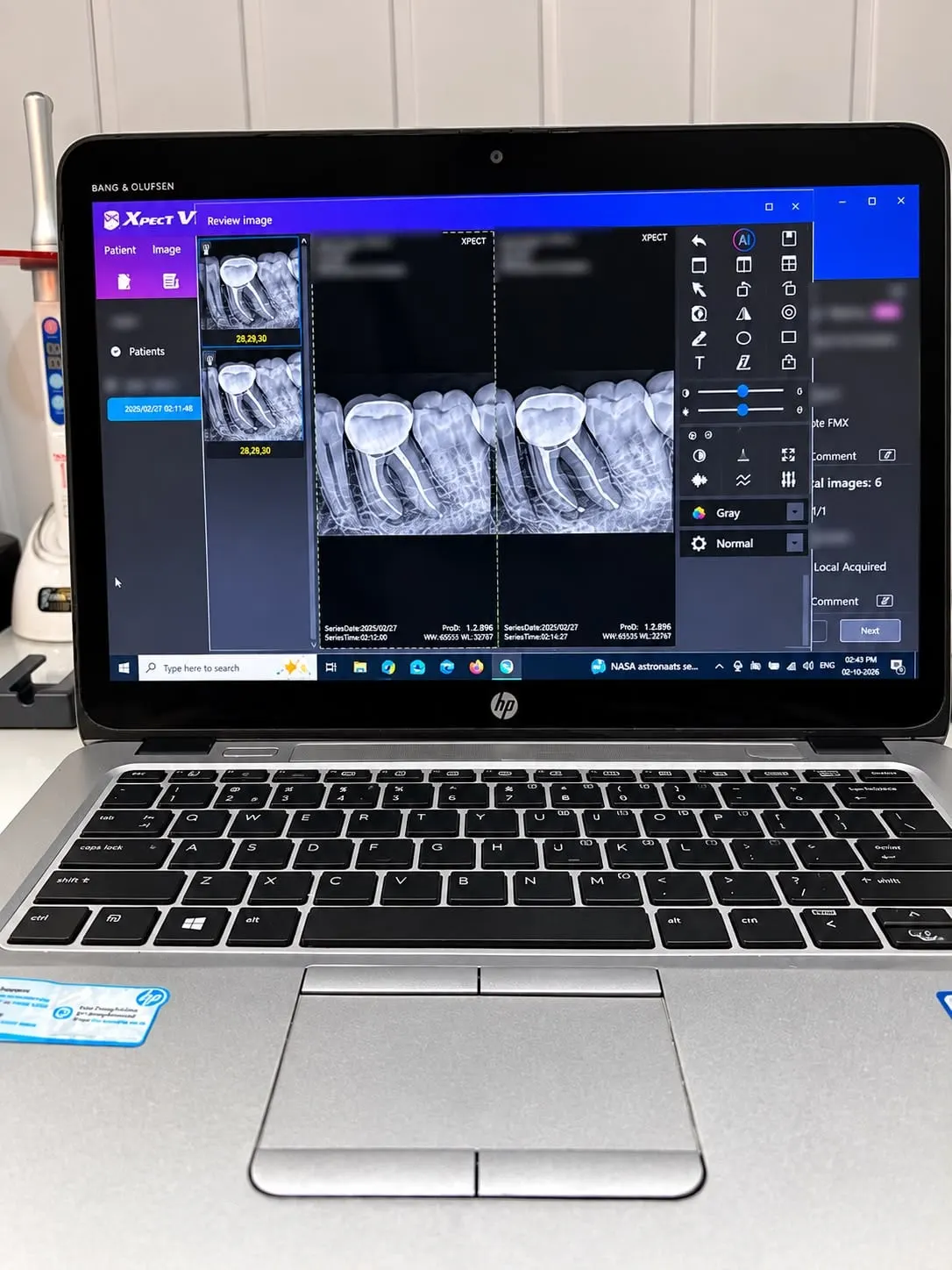
Digital X-ray (RVG)Instant X-rays on screen 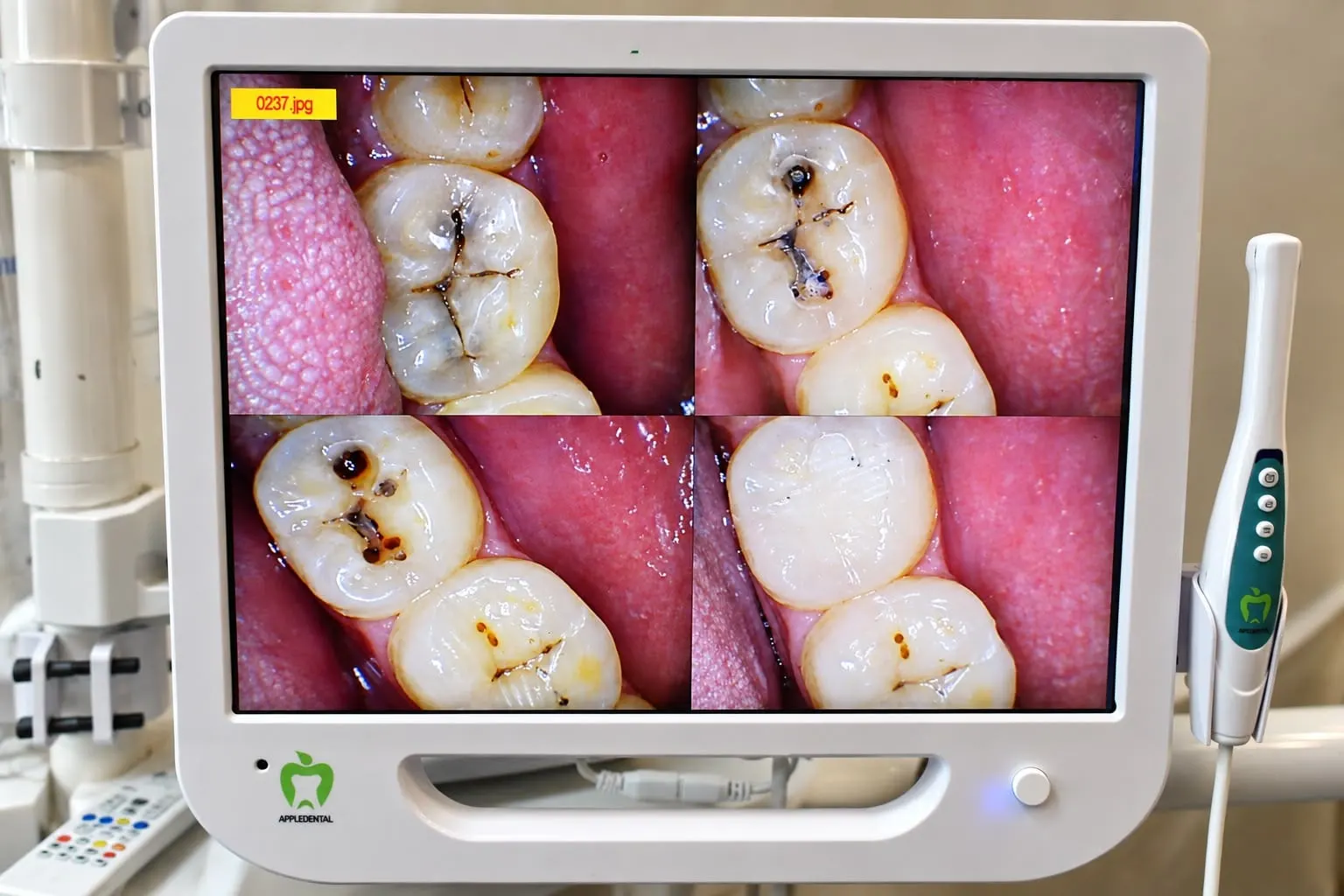
Intraoral CameraSee your own teeth on screen with your dentist
Examination and imaging at Roots & Pulp. See more in the gallery

Meet your dentist
Dr. Shubham Tripathi
- BDS, MPH. Founder & Director.
- Life Member, Indian Dental Association.
- Reg. No. 20606, U.P. State Dental Council.
Read Dr. Tripathi's profile“Dental treatment can feel confusing. Findings, options and the reasoning behind a treatment plan are explained in simple, understandable terms.”
Afterwards: what to expect
Your dentist's instructions always come first. This is general guidance.
- 01
After placement
Some swelling, tenderness or minor bleeding can be normal. Your dentist will tell you how to care for the area and what to eat.
- 02
While it heals
Keep the area clean as instructed, and avoid pressure on it. Attend any check-ups you are given.
- 03
After the crown
Clean around your implant every day, as you would a natural tooth. Your dentist will show you how.
- 04
Long term
Implants can develop gum inflammation if cleaning slips, so regular check-ups and professional cleaning matter.
Keep your review appointments. Early attention to any change is easier than late.
When should I contact my dentist?
Please call the clinic if you notice:
- pain or swelling that is getting worse after the first few days
- bleeding that does not settle
- a fever, or pus or a bad taste near the implant
- an implant, crown or screw that feels loose
- numbness or tingling that continues after the anaesthetic should have worn off
For difficulty breathing or swallowing, or swelling spreading toward the eye or neck, seek emergency medical care straight away.
What affects the cost of dental implants?
We do not publish a fixed price, because every case is different. The main factors are:
- 01
How many teeth
One implant, several, or a full set.
- 02
Preparation needed
Extraction, gum treatment or bone building.
- 03
Imaging
The scans needed to plan safely.
- 04
The restoration
The type of crown or bridge attached.
- 05
The implant itself
The system and materials used.
- 06
Review and follow-up
Check-ups afterwards.
After an examination, Dr. Tripathi gives you a clear written plan and estimate. You can compare it with other options, such as a bridge or denture.
Common questions
Straight answers about dental implants. For anything else, call or send a WhatsApp message.
The area is numbed for placement, so you should not feel pain during it, though you may feel pressure. Some tenderness and swelling afterwards are common. Your dentist will explain what to expect and how to manage it.
It depends on your bone, gums, general health and bite. That is why an examination and imaging come first. If implants are not suitable, Dr. Tripathi will explain other options, such as a bridge or denture.
It varies, because the bone needs time to settle around the implant and some people need preparation first. Your dentist will give you an outline for your own case at the consultation.
The cost depends on how many teeth are replaced, any preparation needed, the imaging, the type of crown and the implant system. After an examination at our Aliganj clinic, you will receive a clear plan and estimate.
There is no fixed lifespan. Many last for years with good cleaning, regular check-ups and healthy gums. Gum disease or heavy bite forces can shorten that, which is why follow-up matters.
An implant is supported by a post in the jawbone. A bridge is held by crowns on the teeth either side of the gap, which usually have to be shaped. Each has advantages, and the right one depends on your mouth.
Not necessarily. Gum disease, low bone volume, some health conditions and smoking can affect suitability or healing. They are also generally considered once the jaw has finished growing. Many of these can be addressed first.
Your dentist will tell you. In general, soft food is advised at first, and hard or chewy food on that area is avoided until your dentist says it is ready. Follow the instructions you are given.
Not always. An implant is fixed and does not come out, but involves a surgical step and a longer process. A denture is removable and generally quicker. Your dentist will explain what suits your situation.
Booking ahead means shorter waits, so we recommend calling, WhatsApp or booking online. We are open Monday to Saturday 10:00 AM to 8:00 PM and Sunday 10:00 AM to 5:00 PM.
Missing a tooth? Start with the options
There is more than one way to fill a gap, and the right one depends on you. Come in for an examination, and Dr. Tripathi will explain what could work and what each involves.
Roots & Pulp Dental Clinic, ED-362, Sector-Q, Aliganj, Lucknow. Near Saraswati Vidya Mandir School. Open seven days.