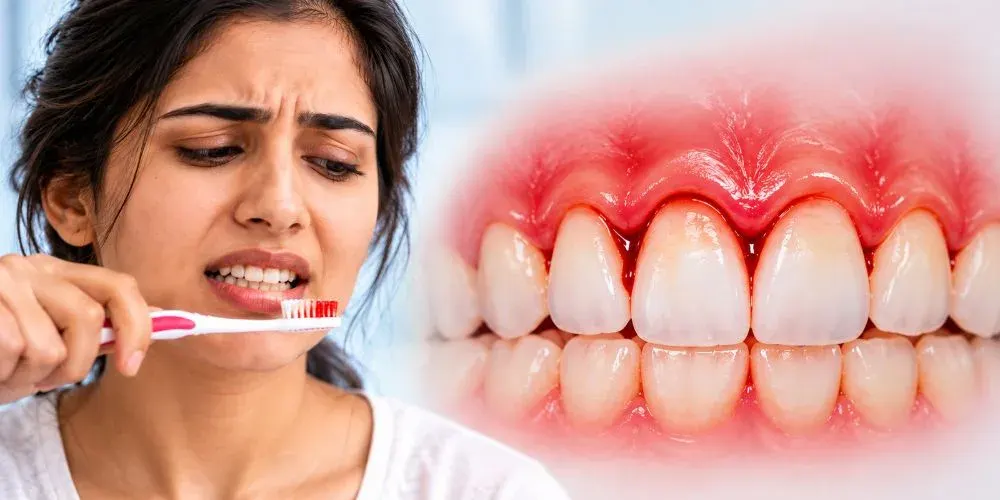
It's tempting to dismiss a little blood, especially when nothing hurts. But bleeding gums are common, not something to consider normal. Often, they're an early sign of inflammation caused by plaque collecting around the gum line. That stage, called gingivitis, can usually be reversed when it is addressed early.
The good news is that a little bleeding does not automatically mean a serious disease. It does mean your gums deserve attention. Here's how to understand the cause and what to do next.
Why do gums bleed when you brush?
Think of the gum line as the narrow border where teeth meet soft tissue. It's easy to brush the visible tooth and miss that border. A sticky layer of bacteria, called plaque, then collects there. If it stays, the gums respond with inflammation: they may become red, puffy, tender and more likely to bleed with brushing or flossing.
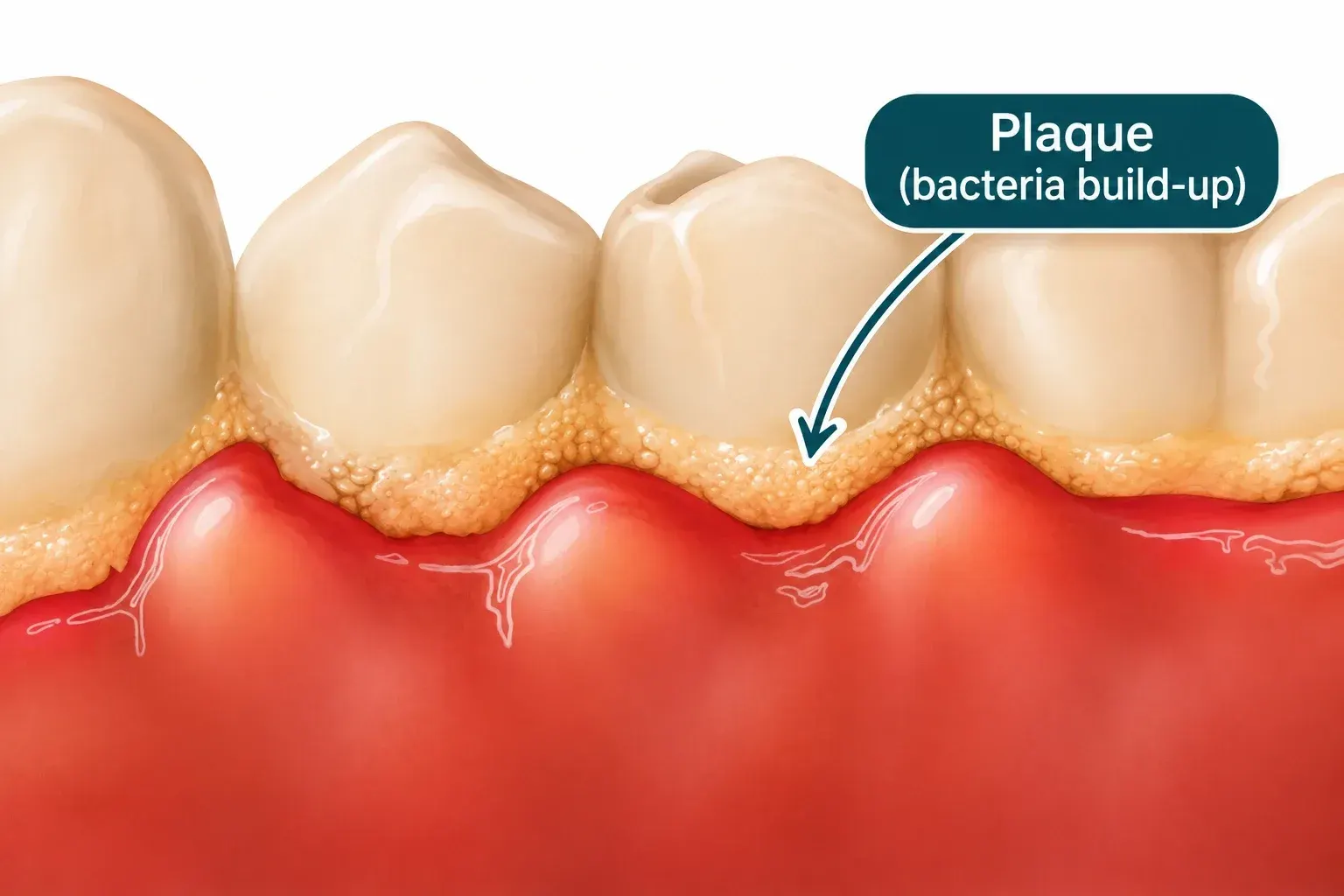
This is gingivitis, the earliest stage of gum disease. It often causes surprisingly little discomfort. You might feel perfectly fine until you notice blood in the sink.
Plaque left on teeth can also harden into tartar, which cannot be removed by brushing alone. A professional cleaning may then be needed alongside better daily care.
But plaque isn't the only possible explanation. Other factors can make bleeding more likely:
- Brushing too aggressively. A hard brush or forceful scrubbing can injure delicate gum tissue. More pressure does not mean cleaner teeth.
- Cleaning between teeth inconsistently. Plaque thrives in areas your toothbrush cannot reach well.
- Pregnancy-related hormonal changes. Gums may respond more strongly to plaque during pregnancy.
- Diabetes, tobacco use or certain medicines. These can affect gum health or bleeding risk. Some medicines, including blood thinners, can increase bleeding; never stop prescribed medication without medical advice.
- Hard-to-clean areas. Crowded teeth, rough restorations or appliances may allow plaque to accumulate.
Occasional bleeding after accidentally catching your gum with a brush is possible. Repeated bleeding, spontaneous bleeding or bleeding that is difficult to stop needs a dental or medical assessment rather than a guess about the cause.
Does bleeding mean I have gum disease?
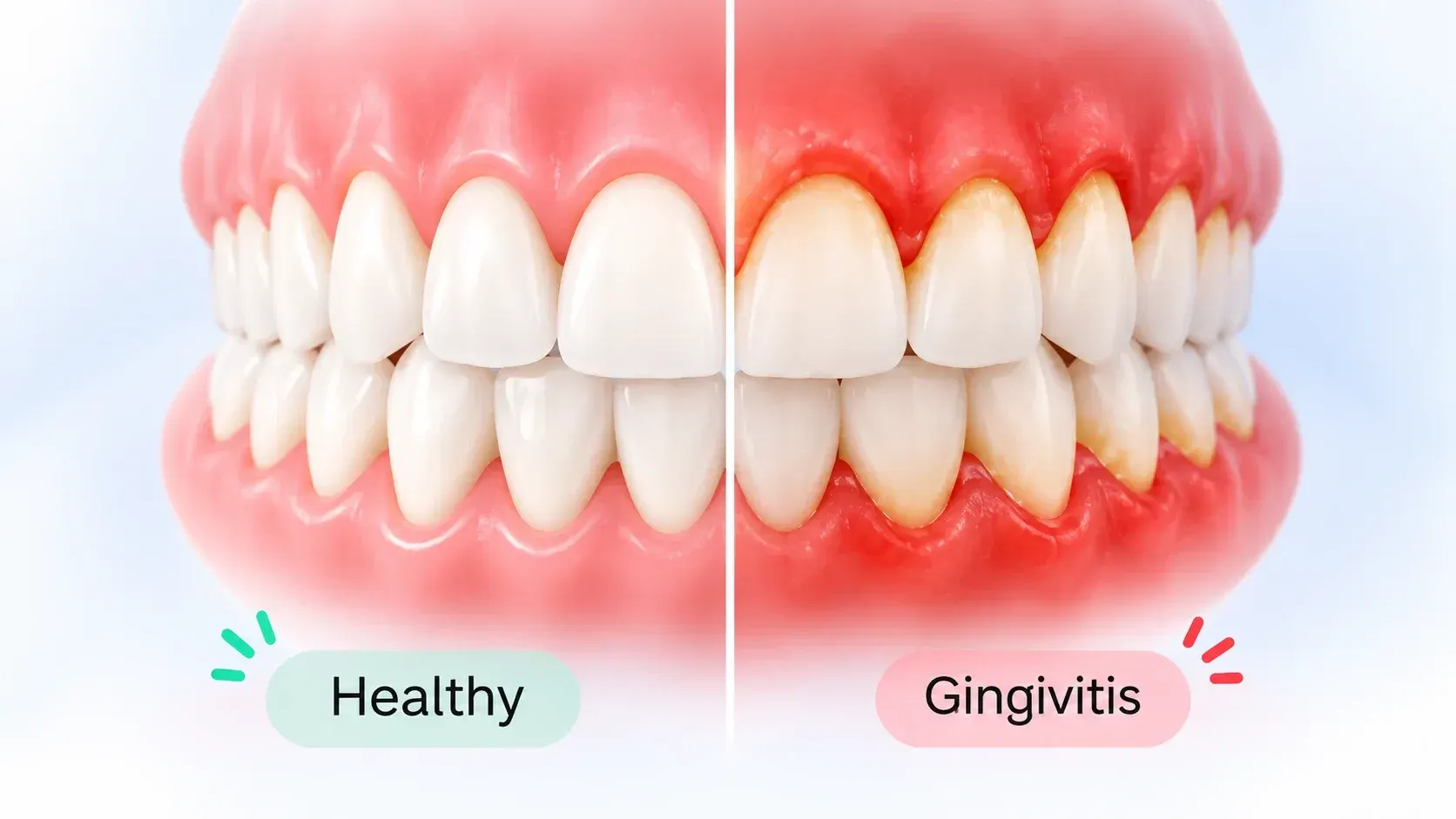
Not necessarily, but gum inflammation is one of the first possibilities your dentist will check.
There is an important difference between gingivitis and periodontitis. Gingivitis affects the gums and can usually improve without permanent loss of the structures holding the teeth in place. Periodontitis is a more advanced condition in which the supporting tissues and bone can be damaged. It may lead to gum recession, deeper pockets and loose teeth.
That is why catching the problem while it seems small matters. You cannot tell how much support your teeth have simply by looking at a streak of blood. A dentist can examine the gums, measure around teeth where appropriate and decide if X-rays are necessary.
Other signs your gums are asking for help
Don't wait for pain. Gum disease can progress quietly. Along with bleeding, watch for:
- gums that look swollen, shiny, red or unusually tender;
- persistent bad breath or an unpleasant taste;
- gums appearing to pull away from the teeth;
- teeth looking longer, or new spaces appearing between them;
- pain when chewing or a tooth that seems to move.
One of these signs does not prove you have periodontitis, but each is a reason to get checked. If you notice a loose adult tooth, very painful swollen gums, a mouth lump or a persistent ulcer or red patch, seek prompt dental advice.
Should you stop brushing the area that bleeds?
Usually, no. This is one of the most understandable mistakes people make. The gum bleeds, so they avoid that spot. Plaque then builds up even more, and the inflammation may continue.
Instead, clean gently and consistently. Use a soft brush, small controlled movements and light pressure around the gum line. Don't attack the area to make the bleeding stop, and don't scrub harder because you see blood. If an area is severely painful, injured or bleeding heavily, contact a dentist for advice.
Similarly, if you have just started flossing after a long break, you may notice bleeding. Don't snap the floss down into the gums. Curve it gently around each tooth, or ask your dentist whether an interdental brush is a better fit. Ongoing bleeding still deserves a check.
Daily habits that genuinely help
Good gum care is not complicated, but technique matters more than force.
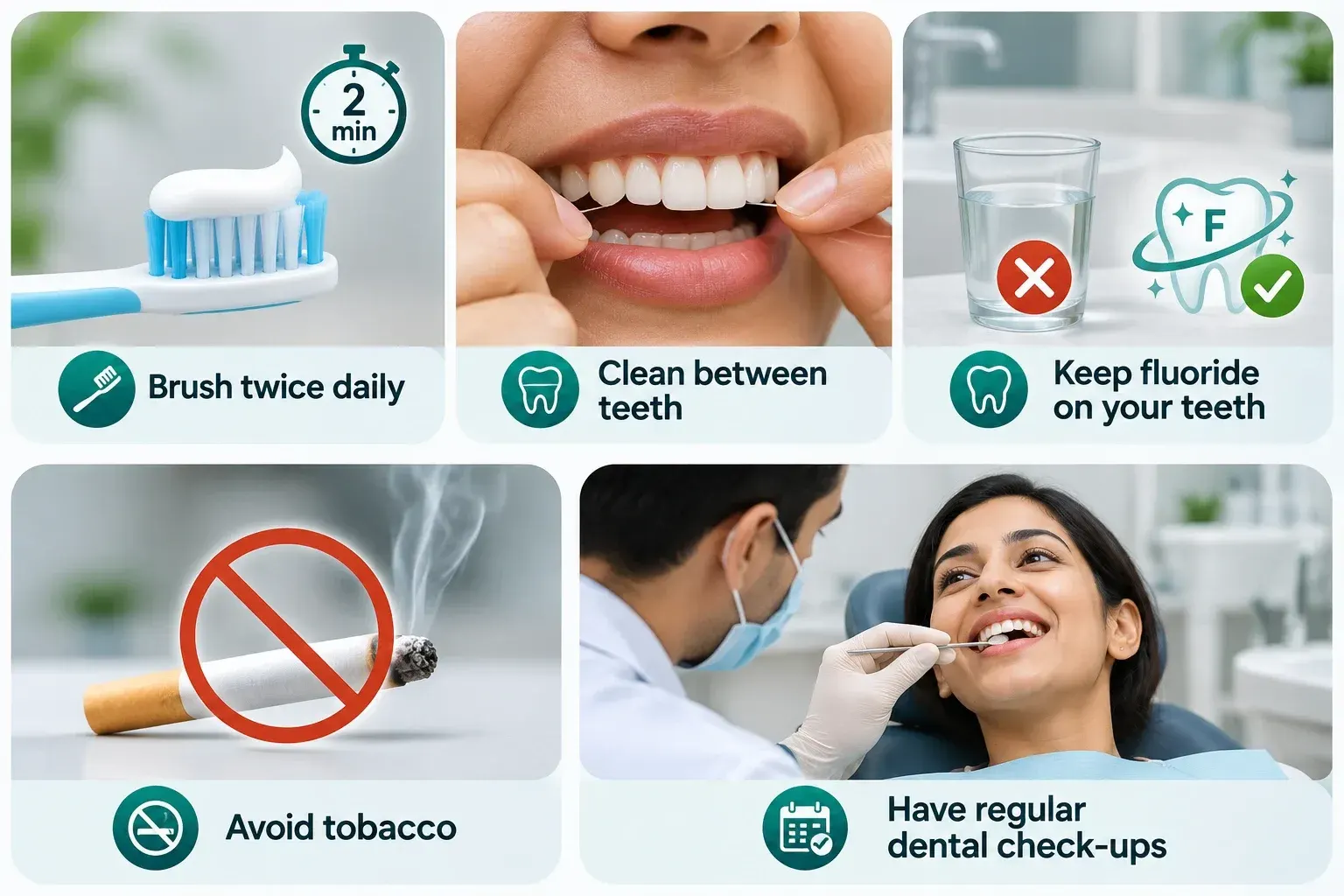
- Brush twice daily for about two minutes using fluoride toothpaste and a soft-bristled brush. Pay attention to the line where tooth and gum meet.
- Clean between teeth every day. Floss or correctly sized interdental brushes can remove plaque from surfaces your regular brush misses.
- Spit after brushing instead of rinsing immediately with water. This helps fluoride remain on the teeth. Avoid mouthwash straight after brushing for the same reason.
- Avoid tobacco. Smoking is linked with gum disease and can sometimes mask obvious bleeding, so a lack of blood isn't proof of healthy gums.
- Keep dental appointments that reflect your risk. If tartar has formed, your dentist may advise professional cleaning; daily brushing cannot remove hardened deposits.
If you aren't sure whether you're cleaning correctly, bring your toothbrush to your appointment. A two-minute demonstration can be more useful than buying another expensive product.
What will a dentist do about bleeding gums?
A dental visit should be about finding the cause, not simply telling you to brush better. Your dentist may ask how long the bleeding has been happening, whether it occurs in one spot or throughout your mouth, what medicines you take and whether you have any other symptoms.
They will examine the teeth and gums, check for plaque and tartar, and may measure gum pockets or recommend X-rays if there are signs of deeper disease. For simple gingivitis, the plan may involve adjusting your home routine and removing tartar. Periodontitis may call for more extensive treatment below the gum line and regular reviews.
You can learn more about how we assess gum and oral health and what happens during professional teeth cleaning at Roots & Pulp Dental Clinic. If you're worried that a cleaning might loosen your teeth, read does teeth cleaning make your teeth loose?
When should you book, and when is it urgent?
The NHS advises seeing a dentist when gums bleed during brushing, flossing or eating hard foods, or when they are swollen or painful. Don't wait for the problem to become severe. If bleeding is recurring, arrange an appointment even if it doesn't hurt.
Ask for urgent dental advice if you have very sore swollen gums, a tooth becoming loose, an unusual mouth lump or persistent mouth ulcers or red patches. Heavy bleeding that will not stop, facial swelling with fever or difficulty swallowing or breathing requires urgent medical attention.
The bottom line
A pink streak in the sink is not a reason to panic, but it shouldn't become a routine sight either. Healthy gums generally don't bleed with gentle cleaning. The earlier you investigate the cause, the better the chance of managing it before lasting damage occurs.
If your gums have been bleeding, Roots & Pulp Dental Clinic in Aliganj, Lucknow can examine them and explain what care, if any, you need. You don't need to arrive knowing the diagnosis. Book an appointment online.
FAQs
Can a new toothbrush make my gums bleed?
A firmer brush or changed technique can irritate your gums, but repeated bleeding should not be blamed on the brush alone. Use soft bristles and have persistent bleeding examined.
Can bleeding gums become healthy again?
Often, yes. Gingivitis is generally reversible when plaque is controlled and any tartar is removed. More advanced gum disease needs professional treatment and ongoing maintenance.
Will mouthwash fix bleeding gums?
Mouthwash is not a substitute for brushing, cleaning between teeth or removing tartar. Ask your dentist whether a particular rinse is appropriate; some medicated rinses are intended only for short-term use.
Clinical references
- NHS: Gum disease
- American Dental Association (MouthHealthy): Gum Disease
- NHS: Take care of your teeth and gums
- Cleveland Clinic: Sensitive Teeth
This article is for general awareness and does not replace a dental examination.